
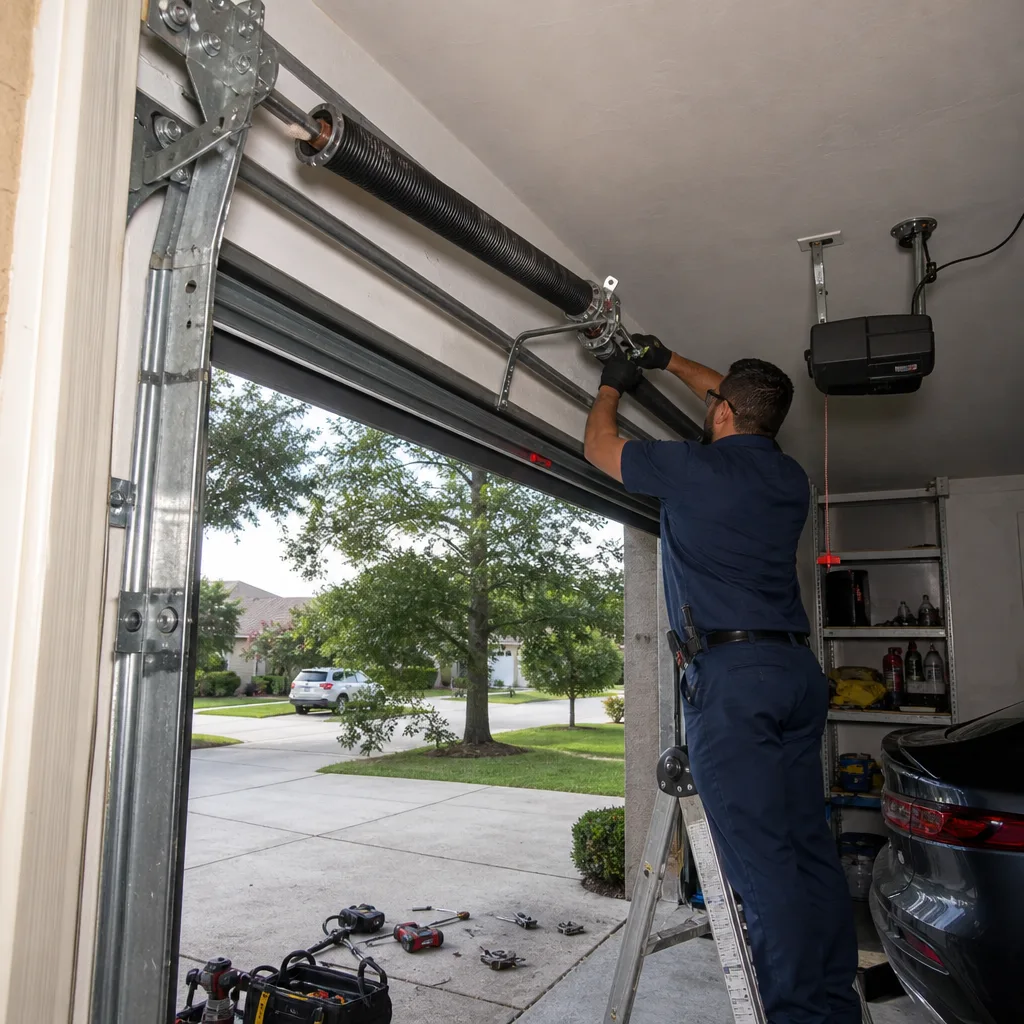
Last updated November 21, 2026
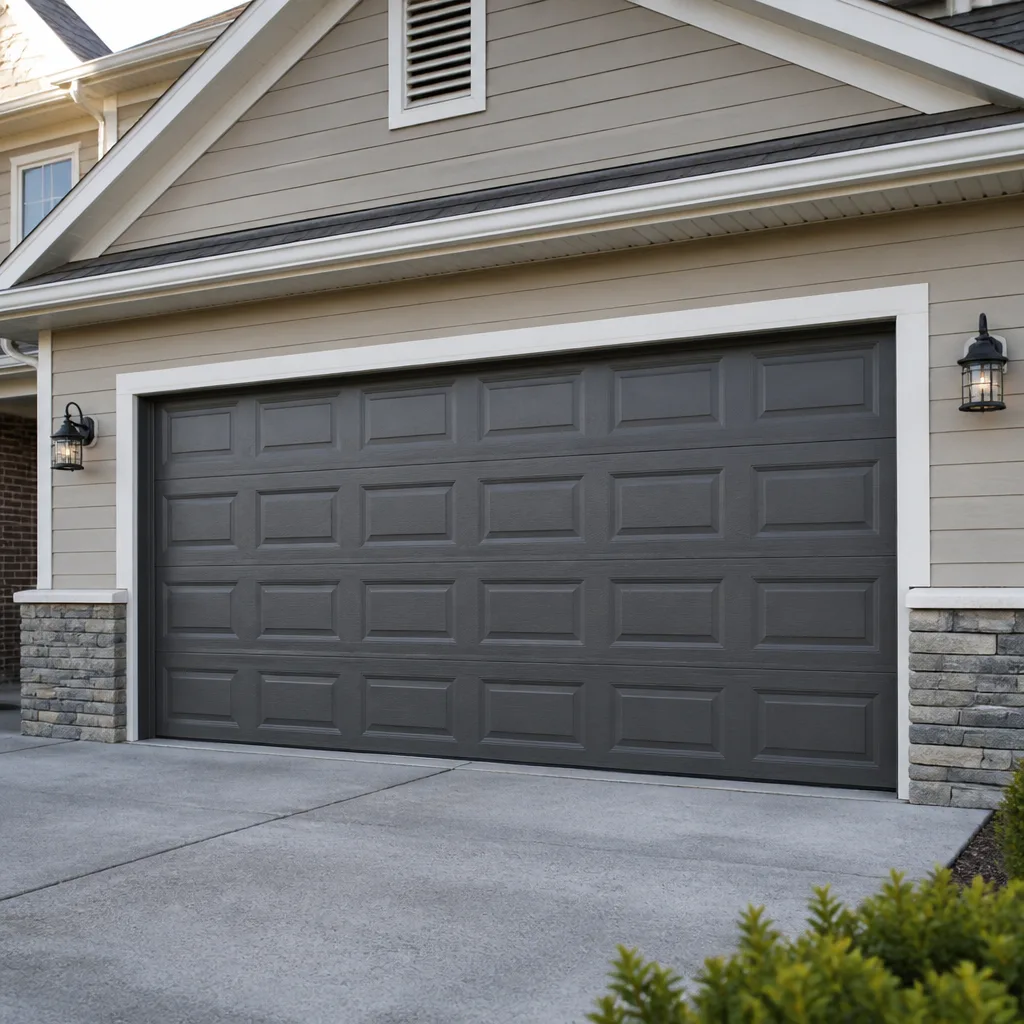 Raised-panel steel
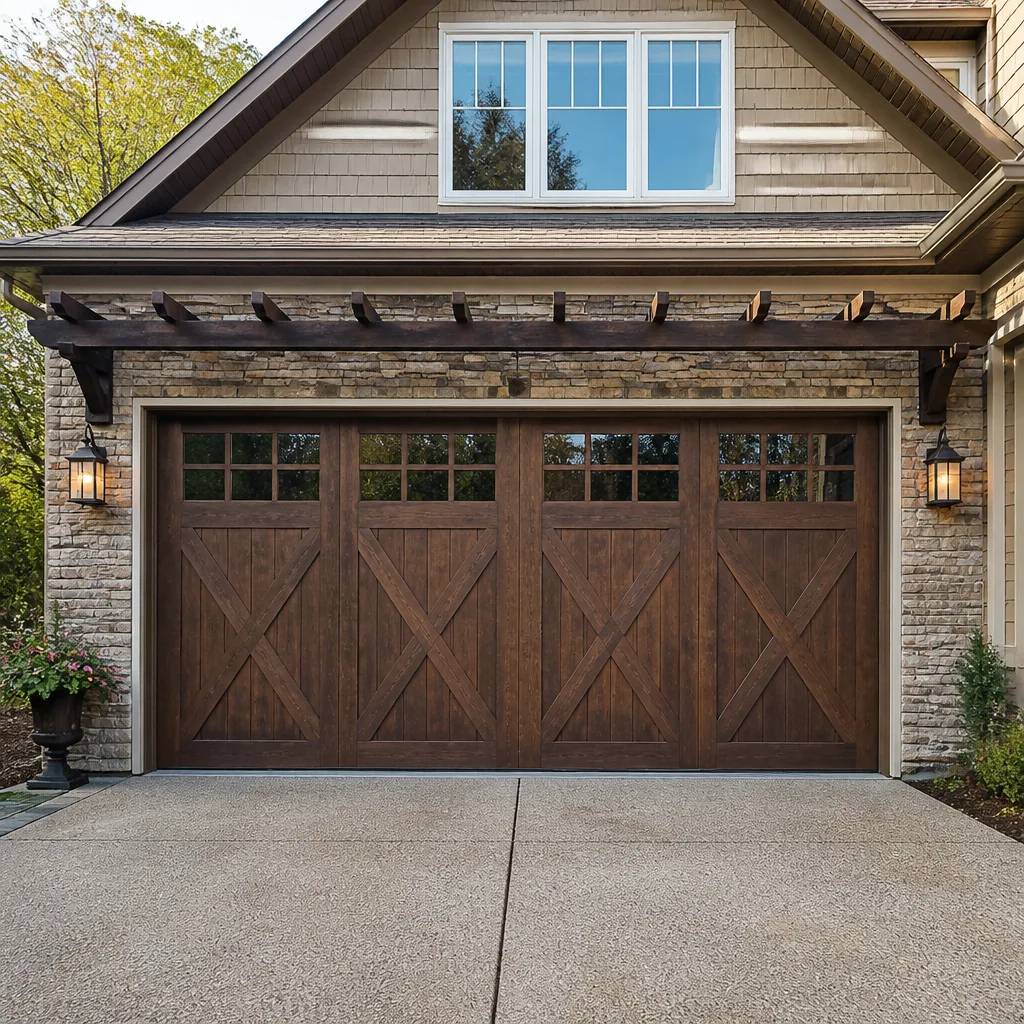 Carriage house
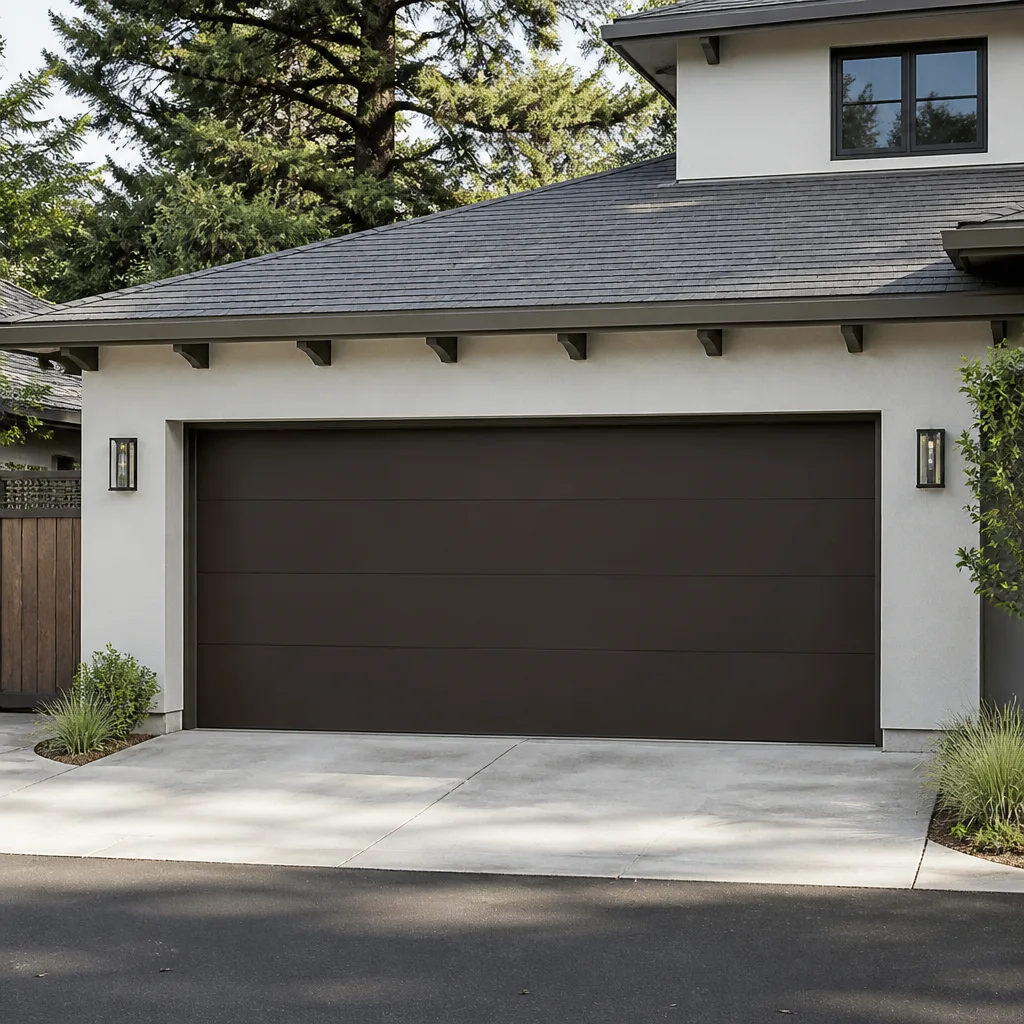 Modern flush
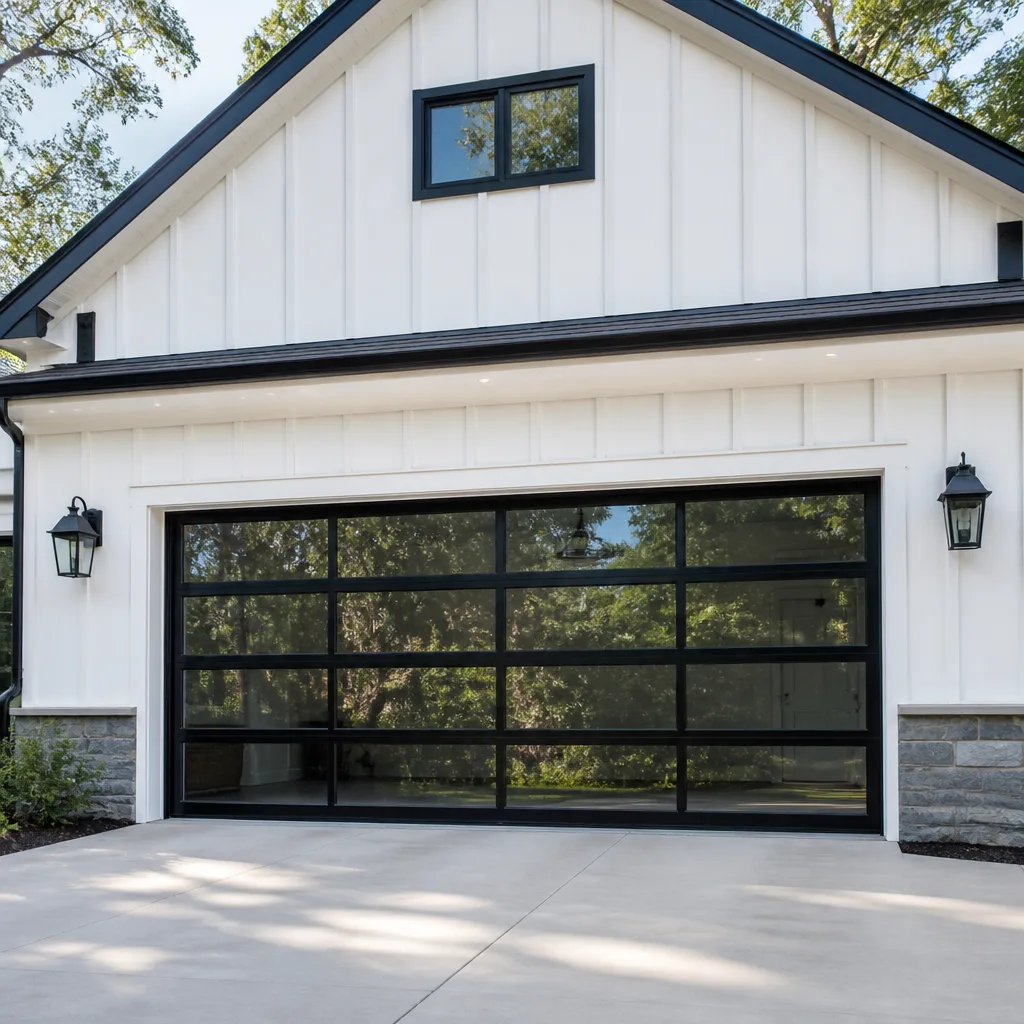 Full-view glass
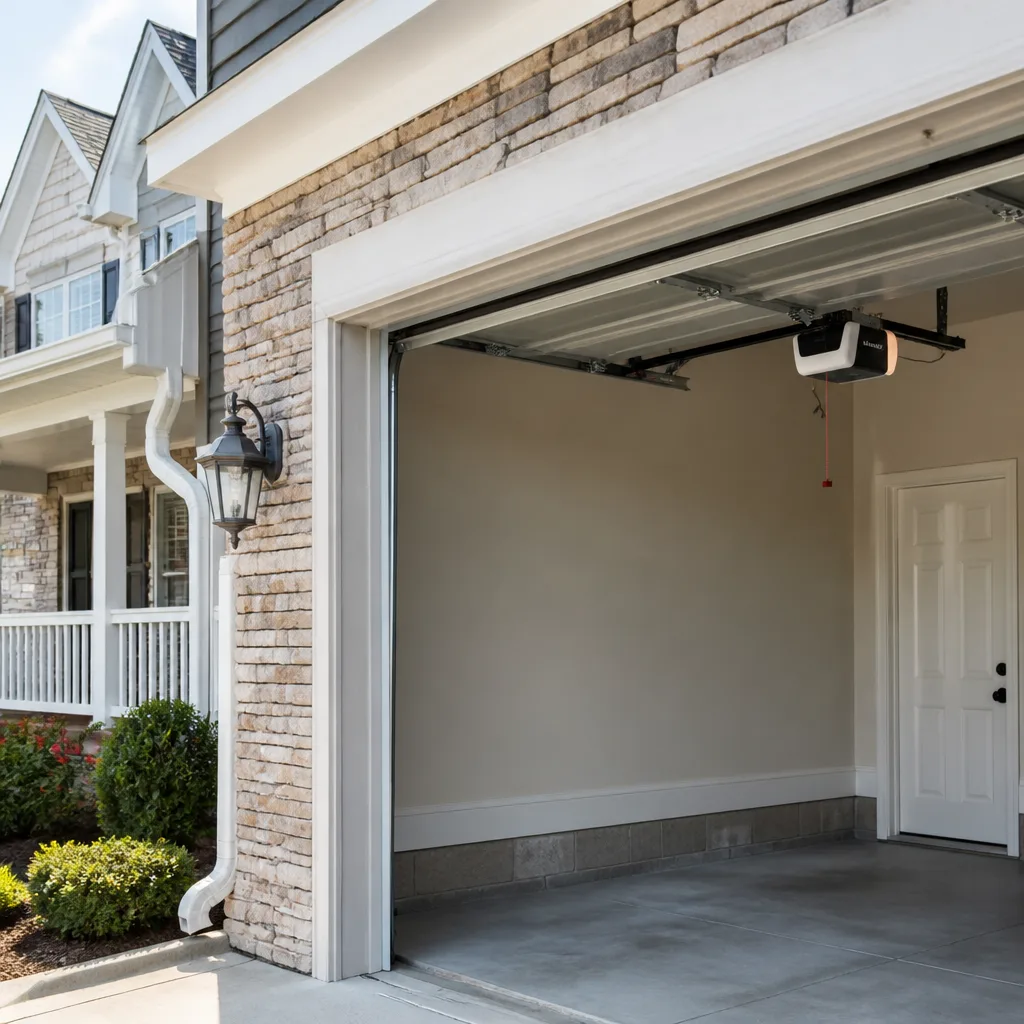 LiftMaster openers
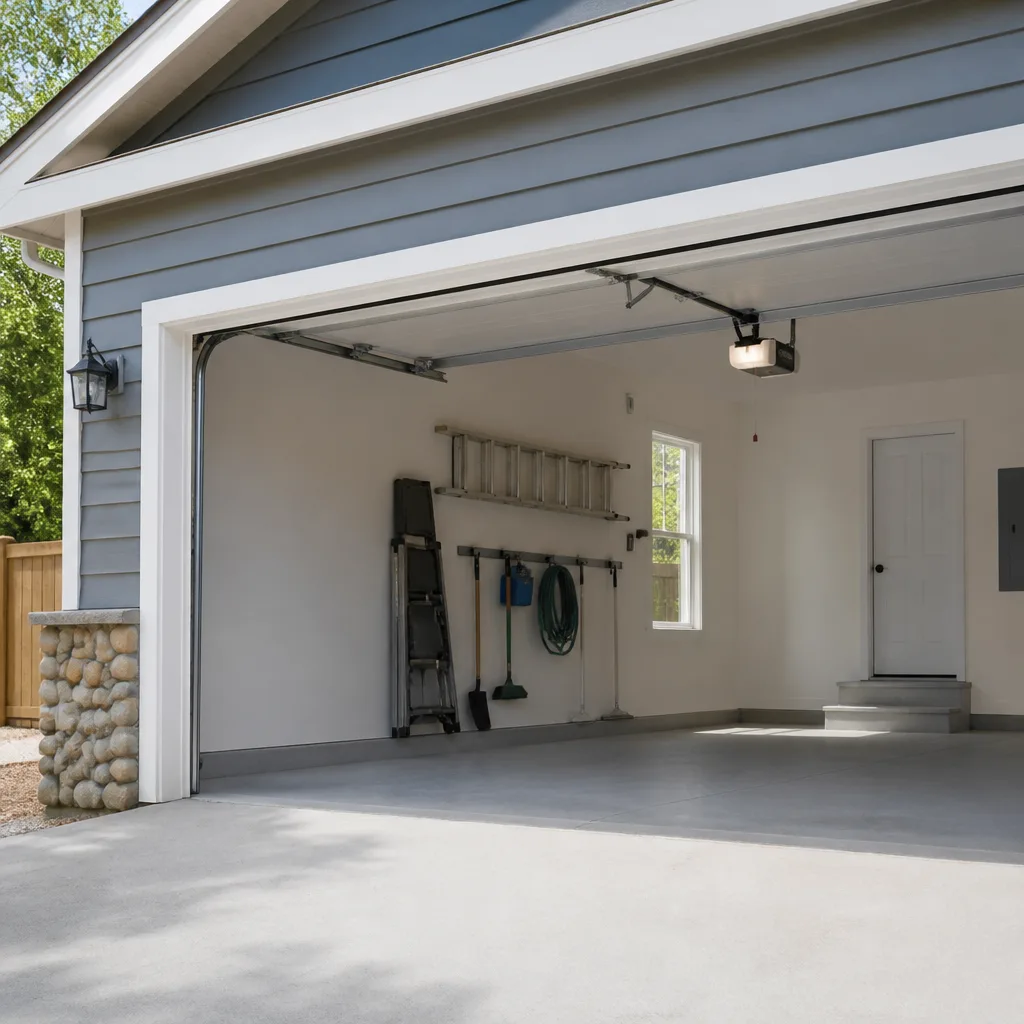 Chamberlain openers
Full 25-point door and opener safety check with every visit - springs, cables, rollers, tracks, and your LiftMaster or Chamberlain opener included
You get a price before we start. It does not change when the pro arrives.
Get your free estimateGarage Door Warning Signs: A Kendall Homeowner’s Reference Guide
A garage door that hesitates for two seconds before it lifts and a door that reverses halfway up often get the same description from a Kendall homeowner: “it’s acting weird.” Those two behaviors point to completely different components. The hesitation usually lives in the opener’s logic board or a tired motor, while the reversal is a safety-sensor or travel-limit issue. Confuse the two and you’ll pay to replace the wrong part. This reference connects specific sounds, movements and timing problems to the parts most likely causing them, so you can describe what’s happening accurately, know which signs can wait and which can’t, and walk into a repair conversation with real information instead of a guess.
Quick Answer
Garage door warning signs in Kendall fall into four groups: noise changes (grinding, snapping, scraping), movement changes (hesitation, jerking, reversal), balance problems (a door that slams down or won’t stay half-open), and opener logic issues (lights flashing, remotes losing range). Snapping or a suddenly heavy door points to a spring failure and needs same-day attention. Grinding, scraping, slow operation and remote issues usually can wait for a scheduled appointment. In Kendall’s heat and humidity, you’ll also see paint bubbling on steel panels and rollers that skip on tracks that collect moisture.
Styles & brands we work with
- Raised-panel steel
- Carriage house
- Modern flush
- Full-view glass
- LiftMaster openers
- Chamberlain openers
Table of Contents
- A Symptom-to-Component Diagnostic Index
- Spring Failure vs. Cable Wear: How to Tell Them Apart
- Kendall-Specific Signs: Heat, Humidity and Your Door
- Which Warning Signs Need Same-Day Service
- Which Warning Signs Can Wait for a Scheduled Appointment
- How to Document Symptoms Before You Call
- Opener Warning Signs and What They Mean
- Seasonal Checks That Catch Problems Early
A Symptom-to-Component Diagnostic Index
Most warning sign guides stop at “it’s loud” or “it’s slow.” That’s not useful when you’re trying to figure out what’s actually failing. The table below maps specific symptoms to the part most often responsible. Use it to sharpen your description when you call, not to self-diagnose a repair. We’ve worked on enough doors across Kendall to know that the way a door fails tells you a lot about which component gave out.
- One sharp bang, then the door won’t lift: torsion spring failure, usually the most likely culprit. The door suddenly feels very heavy.
- Grinding or rumbling while moving: worn rollers, dry hinges or a bearing plate reaching the end of its life.
- Scraping along one side: a bent track, a loose bracket or a door out of alignment.
- Door reverses immediately after touching the floor: safety sensor misalignment or a travel limit set too low.
- Door stops partway up and hums: a failing motor capacitor or a binding door putting too much load on the opener.
- Remote works only up close: opener logic board antenna issue or dying remote battery.
- Door jerks or shudders on the way down: a worn cable or a roller off its track.
- Door drifts down when released halfway: a spring that’s lost tension, which is a balance problem rather than a lifting problem.
The key insight is that sound tells you one thing and movement another. A grinding door that opens smoothly is a roller and hinge problem. A silent door that struggles is a spring or balance problem. Two very different repairs, two very different price ranges. Getting the description right on the phone is what keeps a technician from replacing parts that are fine. Regular garage door repair technicians who know the difference will ask you which symptom came first, because that sequence matters.
Spring Failure vs. Cable Wear: How to Tell Them Apart
These two components fail in different ways, and the warning signs are different enough to separate if you know what to listen for. Both live under high tension. Both are genuinely dangerous to handle, and neither is a part we’d ever suggest a homeowner touch. But recognizing which one is failing helps you describe the problem accurately and understand why the technician quotes what they quote.
Spring warning signs:
- A loud bang from inside the garage, often described as sounding like a gunshot
- A visible gap in the spring coil when you look at it from a safe distance below
- The door becomes extremely heavy and won’t stay open on its own
- Lifting the door by hand takes real effort, or feels impossible
- The door opens partway and stops dead
Cable warning signs:
- Fraying or a birdcage appearance on the steel cable near the drum
- A cable visibly hanging loose or off its pulley
- The door lifts unevenly, tilting to one side as it rises
- A snapping sound that doesn’t stop the door completely, just changes how it moves
- Visible wear or a kink where the cable wraps around the drum
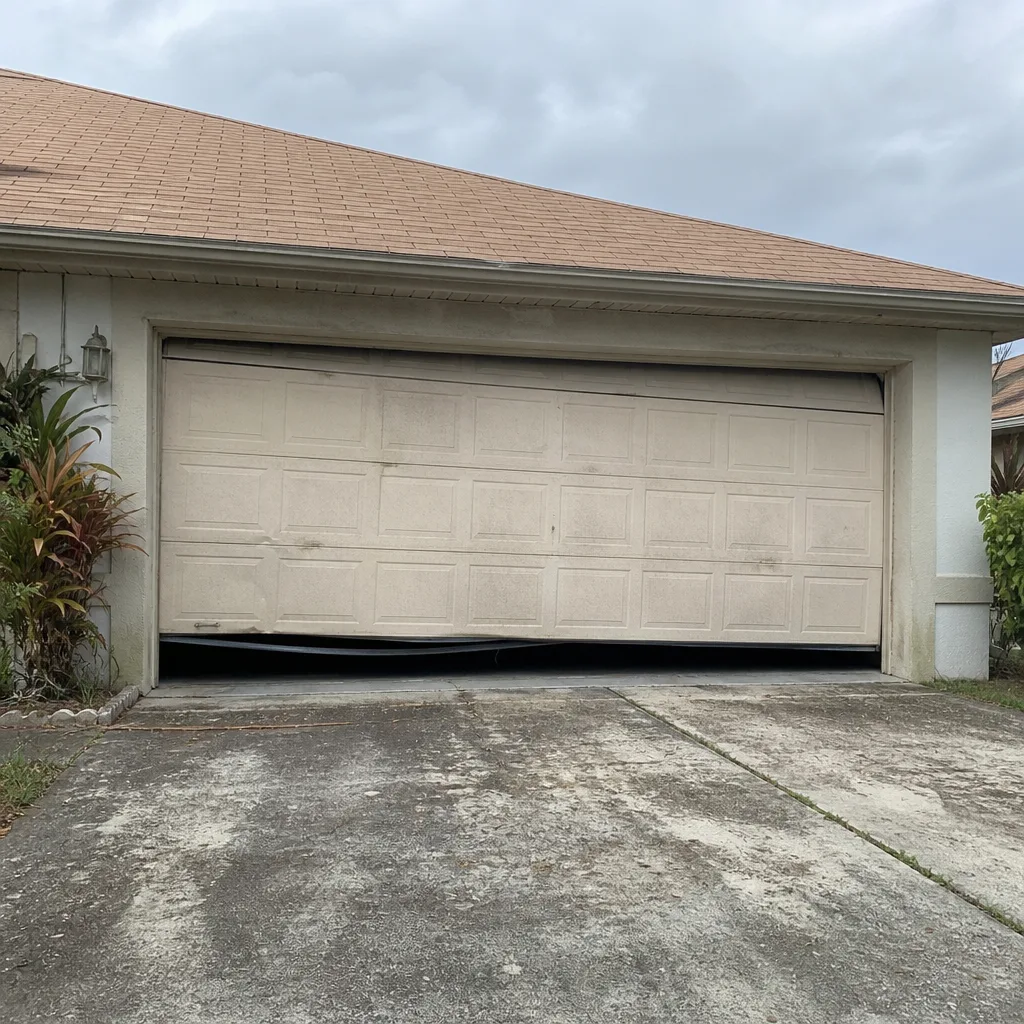
Here’s the distinction that matters: a spring failure is almost always sudden and total. A cable failure often gives warning over several cycles, and the fraying is visible if you know where to look from a safe angle. If you’re not sure which is failing, don’t test it by running the door. Call it in. Spring replacement is one of the most technically demanding jobs in the trade, and it’s the reason garage door spring repair is a service we take seriously. If you see a snapped spring, treat it as same-day and don’t cycle the door again.
Kendall-Specific Signs: Heat, Humidity and Your Door
Kendall winters are mild, but the heat and humidity of summer do things to garage doors that you won’t read about in a national guide. A door that lives through a Kendall summer cycles through temperature swings that expand steel, soften lubricant and pull moisture into the garage. These aren’t dramatic failures, but they’re the signs local homeowners should watch for because they escalate quietly.
Paint bubbling on steel panels. When you see bubbles or flakes on a steel door, that’s usually rust forming under the paint. In a humid garage the moisture finds its way to scratches and seams, and the rust spreads from underneath. Check the bottom panel first, since it sees the most moisture. A small bubble now is a paint touch-up; a large one is a panel that will keep corroding.
Track condensation and roller skipping. On humid mornings you may notice a film of moisture on the tracks. That moisture gets into the rollers and the track groove, and the door starts to skip or stutter as it moves. Dry the tracks and check that the rollers still roll freely by hand once the door is open. If they drag, the rollers are due for replacement.
Opener logic board heat hesitation. An opener mounted in a garage that bakes all afternoon can show heat-related hesitation: the door pauses a beat before it starts, or the opener’s lights blink in a pattern that isn’t normal. This is often a logic board issue rather than a mechanical one. If the door moves fine by hand but hesitates when the opener drives it, that points at the opener, not the door.
We see these signs most often on older steel doors in the neighborhoods around Kendall, where a door that’s been through many summers is showing its age in the finish and the rollers. None of these are emergencies, but they’re the warning signs a Kendall homeowner should act on before they turn into a stuck door. The local heat and humidity are also a good reason to have your opener and door checked annually, since heat can mask a failing part until it fails outright. More on opener-specific symptoms is covered in our guide to garage door opener repair.
Which Warning Signs Need Same-Day Service
Some warning signs can wait a week. Others mean you shouldn’t use the door at all. The difference is whether the failure has already happened or is about to. Here’s the criteria we use to sort them, and the list is designed so you can run through it quickly.
Same-day, don’t run the door:
- A snapped spring. The door is now dead weight held up by the opener or by you. Running it can burn out the opener or drop the door.
- A visibly frayed or loose cable. A cable under tension can fail completely, and a door that drops is a real injury risk.
- The door is off its track or hanging crooked. Moving it can bend the panels or the track further.
- The door won’t close and you can’t secure the garage. That’s a security problem first and a repair second.
- The door is stuck open with a vehicle trapped inside. Obvious, but it’s the situation that makes people call in a hurry.
- Any loud bang followed by the door not moving. Treat it as a spring failure until a technician says otherwise.
Those six are the cases where waiting risks more damage or a security gap. When your door won’t move, we move fast. Call us and be ready to describe what you heard and what happened right after. We answer 24/7, and fast dispatch runs from 7am to 7pm. If you call outside those hours, we book you into the next opening, Sunday through Friday, 7am to 7pm, and the price is still set by the written estimate, never by the hour you called.
Which Warning Signs Can Wait for a Scheduled Appointment
Not every symptom is a crisis, and treating them all like one leads to overspending and unnecessary urgency. These signs can wait for a scheduled visit, usually within the same week. They’re worth fixing, but nobody’s safety or security depends on you calling before you finish your coffee.
- Grinding or rumbling during operation. Worn rollers and dry hinges make noise, but they rarely fail catastrophically without warning. Book a visit within a week.
- A remote that only works from close range. Usually a battery or antenna issue. Test with fresh batteries first; if that doesn’t fix it, schedule a diagnostic.
- The opener’s lights blink in a pattern. That’s often a self-diagnostic code. Note the pattern and mention it when you call.
- The door opens with a slight pause. If it still completes the cycle, it can wait, especially if the hesitation is heat-related.
- Paint bubbling or minor rust. A cosmetic issue today, a panel replacement later. Schedule a check and a touch-up.
- The door doesn’t sit perfectly level when closed. Often a travel-limit or minor adjustment, not a hardware failure.
The rule of thumb: if the door moves under its own power and isn’t visibly damaged, it can typically wait for a scheduled appointment. If it doesn’t move, or you see broken hardware, treat it as same-day. A free estimate means the scheduled visit costs you nothing to find out what’s wrong, and you get a written price before any work begins. That’s the opposite of the runaround people fear.
How to Document Symptoms Before You Call
The best diagnostic conversation starts with your phone in hand. Before you call, spend two minutes documenting what you’re seeing and hearing. This isn’t busywork. A technician who can see the symptom description is already ahead of one starting from scratch, and you’re less likely to be talked into a repair you don’t need because the evidence is right there in the photos.
- Take a video of the full cycle. Start recording before you press the button and let the door complete its open and close cycle. This captures sound, timing and movement together.
- Photograph the springs from a safe distance. Stand below and to the side, never directly under the spring, and take a clear picture of the whole spring assembly. A gap in the coil shows up in a photo.
- Photograph the cables where they meet the drum. Get close enough to see fraying, but don’t touch the cable or remove any covers.
- Note the timing. How long does the door pause before moving? Count it out.
- Note what happens at the floor. Does the door reverse, stop or press down?
- Write down the brand and model. A LiftMaster, Chamberlain or Genie opener will have the model on the back or side panel, and knowing it helps a technician arrive prepared.
- List what you’ve already checked. Fresh batteries, sensor alignment, anything you’ve looked at. This saves time.
When you call with a video, a model number and a description, the conversation is short and specific. Our technicians have up to 10 years of experience, and they can often narrow the diagnosis from a short video before they arrive. The brands matter here. We’re factory-familiar with 8 major brands, so a Clopay or Amarr door gets recognized the moment we see it, and an opener with a brand-specific fault code doesn’t need a return visit to look it up. Whether it’s a Genie with a sensitivity issue or a Chamberlain with a logic board pattern, the diagnosis starts from what you documented.
Opener Warning Signs and What They Mean
The opener has its own warning signs, and they’re easy to misread as door problems. If the door moves smoothly by hand but the opener struggles, the issue is with the opener, not the door. That distinction matters because a homeowner who assumes a motor is dying can end up paying for a new opener when the real fix is a capacitor or a sensor alignment.
Opener-specific signs to watch:
- The door pauses a beat before it moves, then runs fine – often a failing capacitor or heat-related logic hesitation
- The opener lights blink in a repeating pattern – usually a self-diagnostic code, worth looking up or noting
- The door reverses immediately on contact with the floor – sensor or travel-limit issue, not a motor problem
- The opener strains audibly but the door barely moves – the door is binding or the spring is tired, and the opener is working too hard
- The remote works inconsistently – battery, antenna or logic board
- The opener runs but the door doesn’t move – a stripped gear, broken chain or coupler
The safest move for an opener that sounds like it’s straining is to stop using it. An opener pushing a door with a failing spring will burn out its motor, and that’s a much bigger bill than a spring repair. A technician can test the door’s balance and tell you whether the opener is being overloaded. Our repair work covers app-connected and legacy systems alike, so if your opener is a modern smart-home model from LiftMaster or a legacy opener, the repair work starts with knowing the system.
Seasonal Checks That Catch Problems Early
A few minutes once a season catches most of the warning signs before they become failures. Kendall’s mild winters mean the garage door never really gets a seasonal break, so the check is more about heat and humidity than cold-weather hardening. Here’s the short version of what to look at.
- Listen on every cycle. Grinding, scraping or knocking that wasn’t there last month is the earliest sign something is wearing.
- Test the balance by hand. With the opener disengaged, lift the door to about halfway and let go. It should stay put. If it drops, the springs are losing tension.
- Check the safety sensors. Clear the area and verify the door reverses when something crosses the beam near the floor.
- Look at the paint. Bubbles and flakes on the bottom panel are rust forming.
- Wipe the tracks and check the rollers. Dry tracks and free-rolling rollers save the opener a lot of strain.
- Test the remotes. A weak remote now is a battery or antenna issue you can handle before it stops working entirely.
- Look at the springs and cables from a safe distance. A gap in the spring, a frayed cable or a loose bracket is a call-a-technician moment, not a DIY one.
If the checklist turns up anything on the same-day list above, don’t wait. If it’s on the scheduled list, add it to a visit and get a written estimate. Kendall Garage Door Repair Co handles the full door system, from hardware to opener, so a single visit can cover several of these at once instead of several trips. Garage doors are all we do, which is why the small signs are ones we know how to read quickly.
Common Mistakes to Avoid
- Running the door after a spring snap. A door held up by a failed spring can drop the moment the opener releases it. Stop, and leave it up if it’s up.
- Assuming a slow door means a dying opener. In most cases the door itself is binding or the spring is tired. Replacing the opener doesn’t fix a door problem, and the new opener inherits it.
- Trying to adjust or replace a spring yourself. Springs are under high tension and can cause serious injury. This is a trained-professional job, every time.
- Ignoring paint bubbles on steel panels. Rust spreads under the paint, and a small bubble in Kendall’s humidity becomes a panel replacement later.
- Calling with a vague description. “It’s acting weird” doesn’t point at anything. A video, a model number and a sentence about timing gives a technician a real head start.
- Washing out the tracks or over-lubricating. Tracks collect grit and moisture, and the wrong lubricant attracts dust. Dry cloth and the right product are better than any shortcut.
- Letting a minor alignment drag. A slightly crooked door wears rollers faster and strains the opener. A quick adjustment now avoids a bigger repair later.
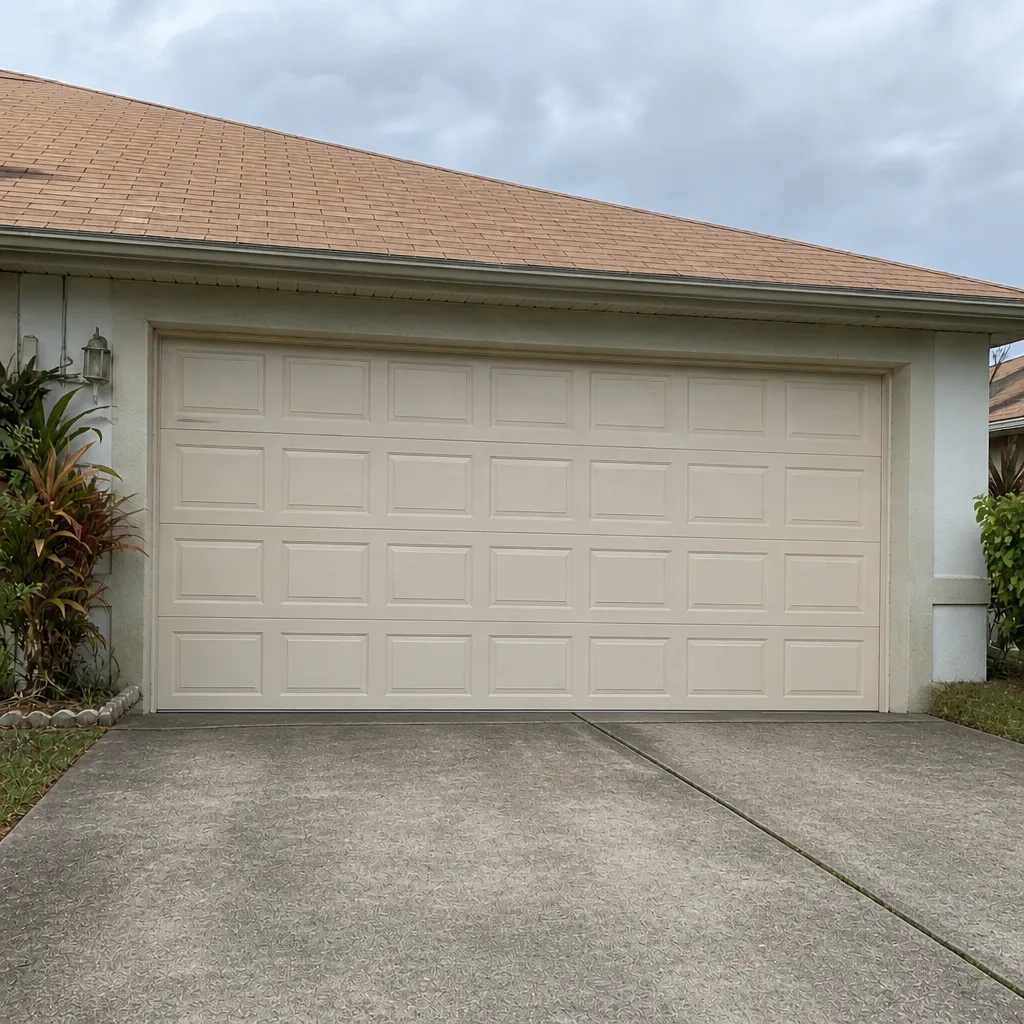
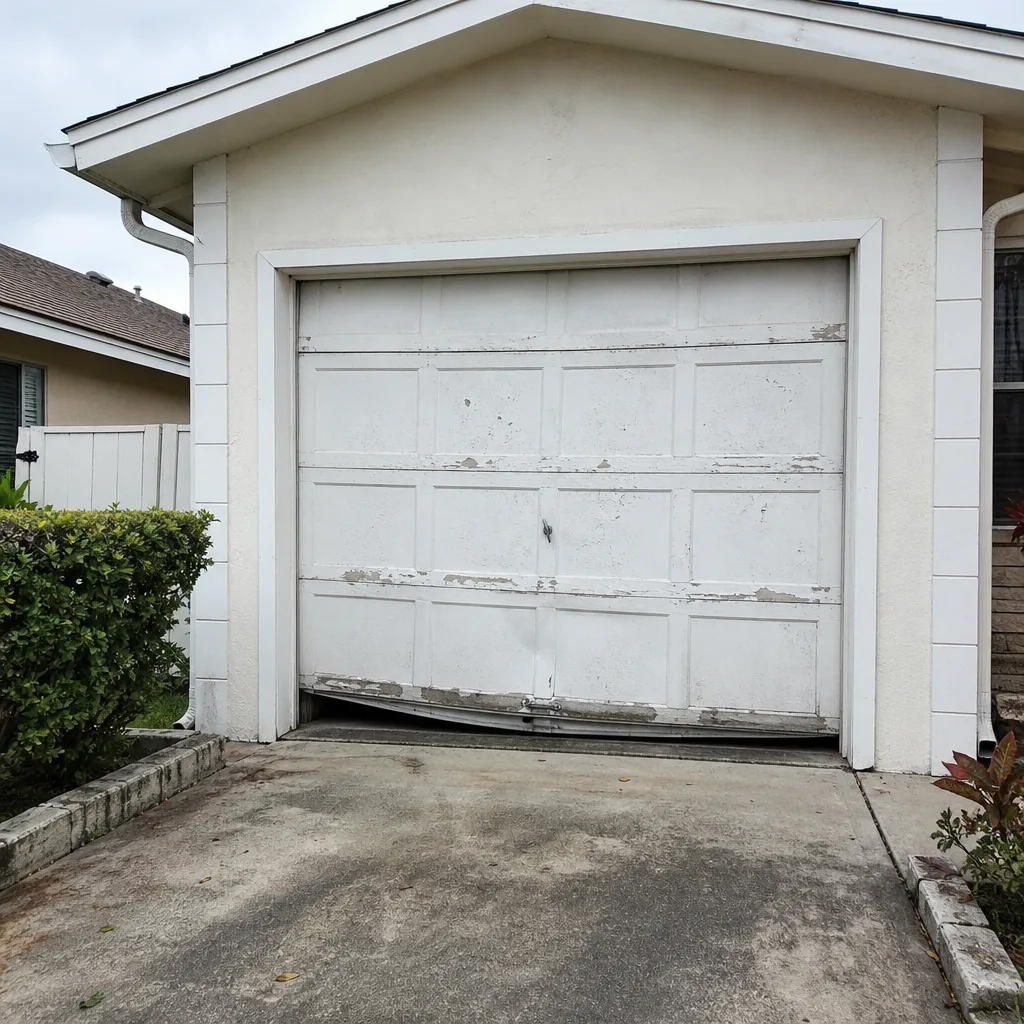
See the difference
 Before
 After
 Before
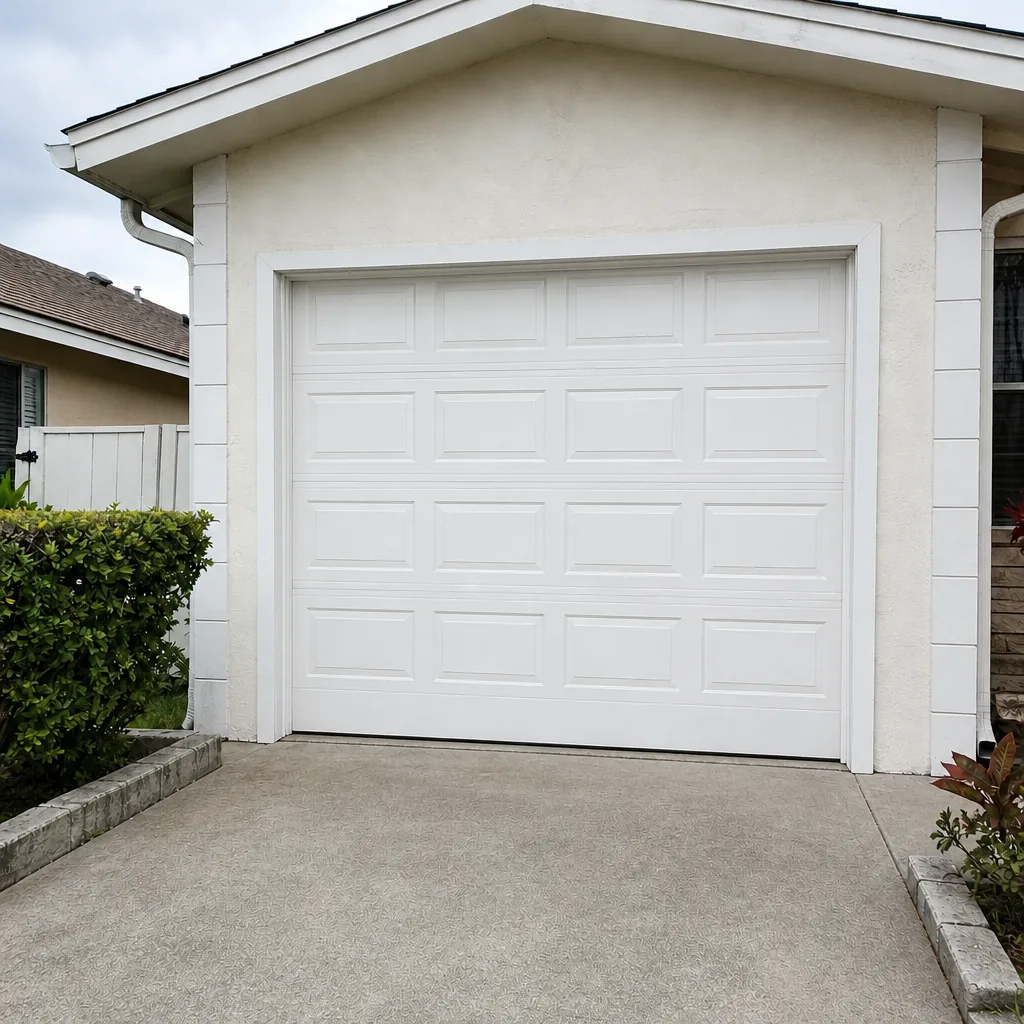 After
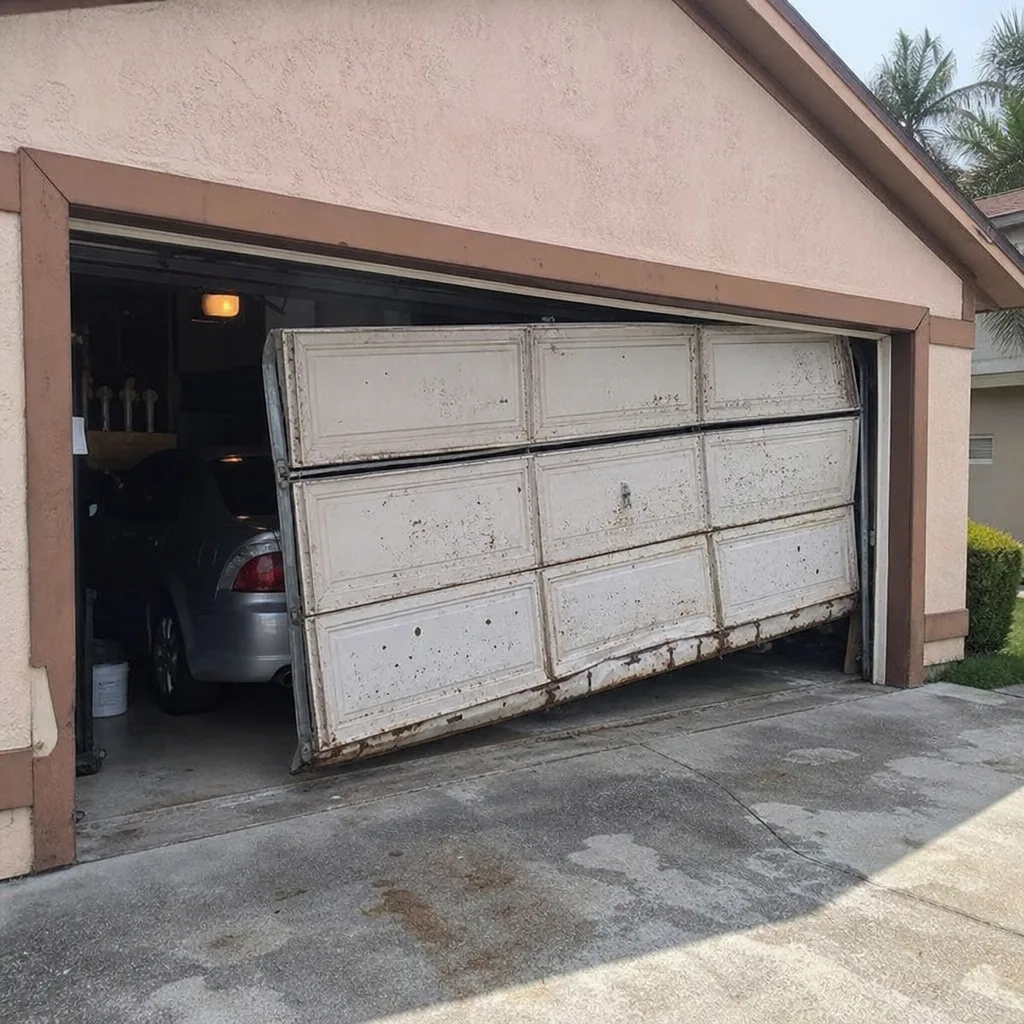 Before
 After
When to Call a Professional
Call a professional the moment you see a snapped spring, a frayed cable, a door off its track, or a door that won’t move and won’t close. Those are same-day cases. Call for a scheduled appointment if the door is noisy, slow, slightly crooked or showing rust, and call for a diagnostic if the opener hesitates, the lights blink or the remote loses range. The dividing line is simple: if the door still moves under its own power and isn’t visibly damaged, you can schedule it. If it doesn’t move, or the hardware looks broken, don’t run the door. Kendall Garage Door Repair Co offers free estimates in Kendall, and we answer 24/7. Call (844) 484-9800 and we’ll book you in, with fast dispatch from 7am to 7pm, Sunday through Friday. The price is quoted and agreed before any work starts, and the written estimate is what sets the final price.
Frequently Asked Questions
The most common early warning sign we hear about in Kendall is a grinding or rumbling noise during operation, which usually means worn rollers or dry hinges. It’s followed closely by a door that hesitates before it lifts, often a heat-related opener hesitation in a garage that gets hot in the afternoon. Call (844) 484-9800 for a free estimate and we’ll help you sort out which one you’re hearing.
A broken spring is usually obvious: you’ll hear a loud bang and the door will suddenly feel very heavy and won’t stay open. A worn spring gives warning as a door that slowly gets harder to lift by hand and doesn’t stay put when you stop it halfway. If you can’t tell, don’t test it by running the door. Call (844) 484-9800 and describe what you’re seeing.
No, and we’d strongly advise against it. Garage door springs are under high tension and can cause serious injury if they fail during handling, and the tools and knowledge required aren’t something to pick up from a video. Spring repair is a job for trained, safety-conscious technicians. Call (844) 484-9800 for spring repair done safely.
A hesitation before the door moves is usually an opener issue rather than a door issue, and in Kendall’s heat it’s often a logic board or capacitor problem that shows up in the afternoon. If the door also feels heavy when you lift it by hand, the cause is more likely a tired spring. Either way, it’s worth a diagnostic. Call (844) 484-9800 for a free estimate.
A door that reverses halfway up has almost always tripped its safety sensor or hit a travel limit set too short, not a mechanical failure. Clean the sensor lenses and make sure nothing is in the beam path. If it still reverses, the limit needs adjusting, and that’s a quick scheduled visit. Call (844) 484-9800 and we’ll get it sorted.
Paint bubbling on a steel door usually means rust is forming underneath, and in Kendall’s humidity it spreads if you leave it. A small bubble is a paint touch-up; a spreading one is a panel that will keep corroding. Have it looked at on a scheduled visit. Call (844) 484-9800 for a free estimate.
Take a short video of a full open and close cycle, photograph the springs and cables from a safe distance, write down the opener brand and model, and note the timing of any pause or reversal. That gives the technician a strong starting point. Then call (844) 484-9800 with what you’ve documented. The first visit is a free estimate and a written price.
Stop using the door if you see a snapped spring, a frayed or loose cable, a door off its track, or a door that won’t move after a loud bang. Running it in any of those conditions risks more damage or injury. Call (844) 484-9800. We answer 24/7, and fast dispatch runs from 7am to 7pm, Sunday through Friday.
The Bottom Line
Garage door warning signs are only useful if you know what they point at. A hesitation, a reversal, a grinding noise and a drifting door each tell a different story about which component is failing, and mixing them up is how homeowners end up paying for the wrong repair. Watch for the Kendall-specific signs too: paint bubbles on steel, tracks that collect moisture, openers that hesitate in the heat. Sort every symptom into same-day or scheduled before you call, and document what you see so the diagnosis starts from real information. When a spring snaps or a door comes off track, don’t run it. For everything else, a free estimate and a written price are the right next step. Call (844) 484-9800. We answer 24/7, with fast dispatch from 7am to 7pm, Sunday through Friday, and the price is agreed before any work starts. Visit Kendall Garage Door Repair Co to see what we handle.
Written by the team at Kendall Garage Door Repair Co.