
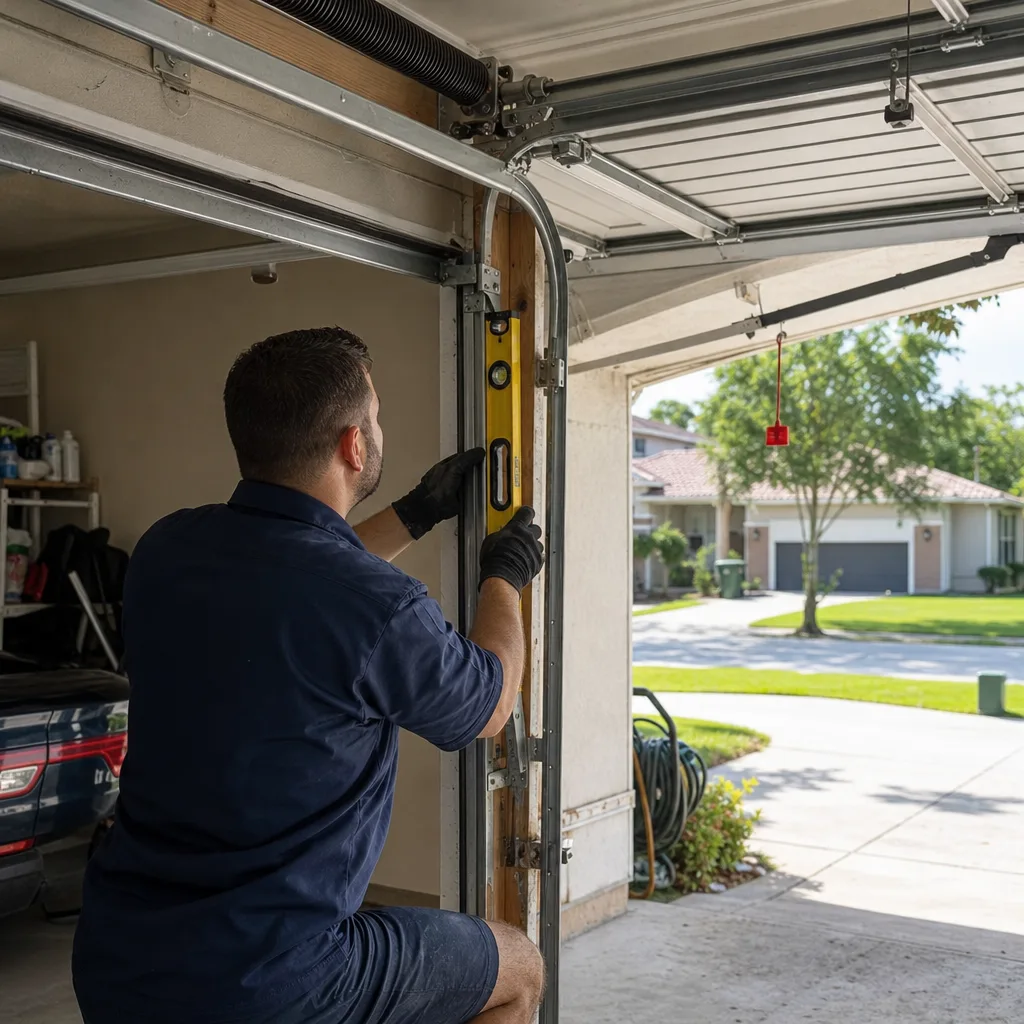
Last updated November 21, 2026
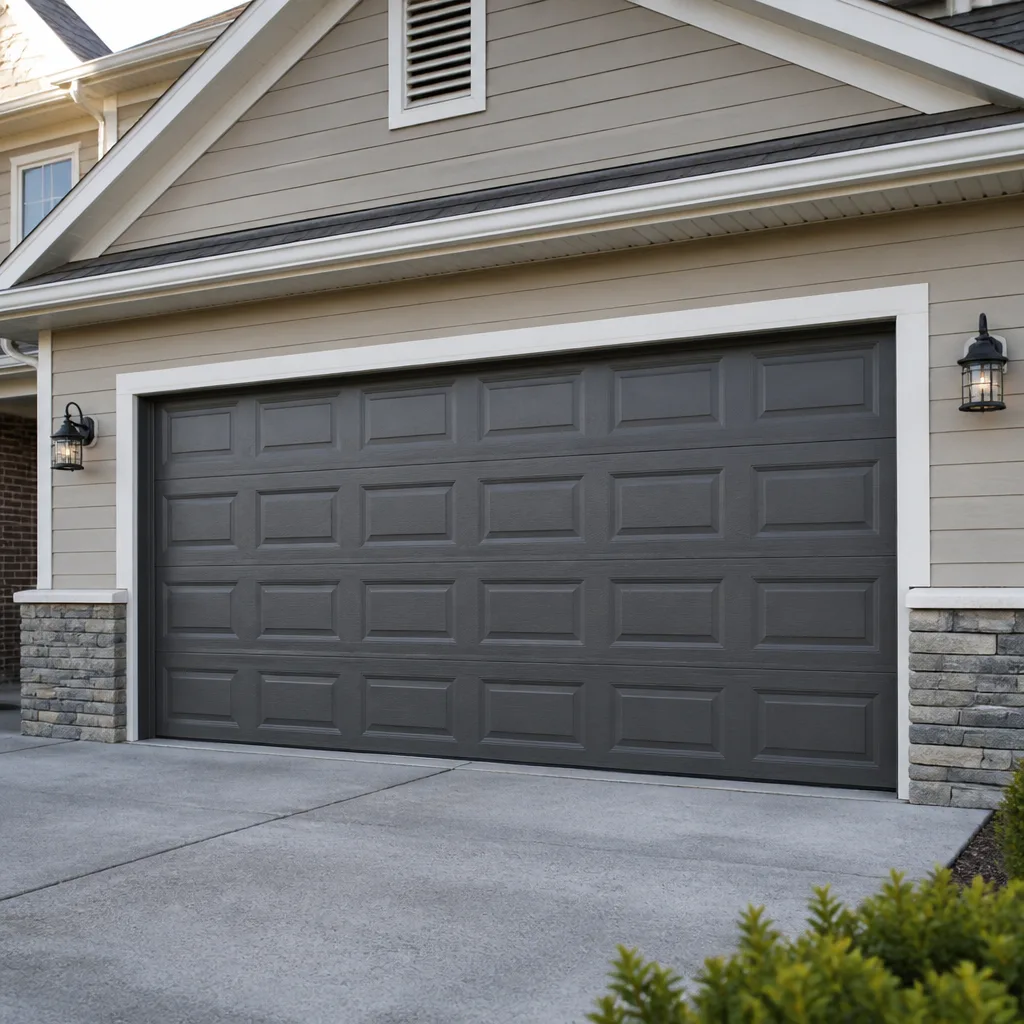 Raised-panel steel
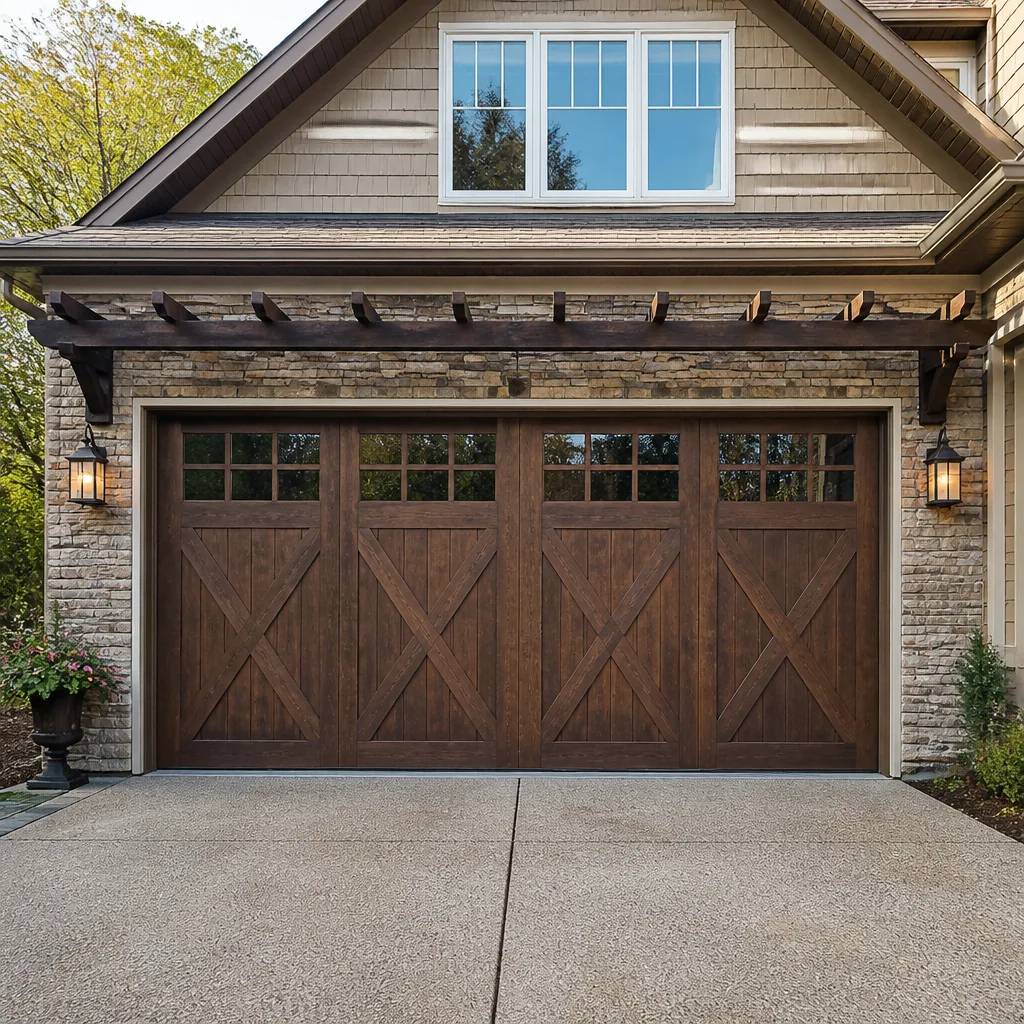 Carriage house
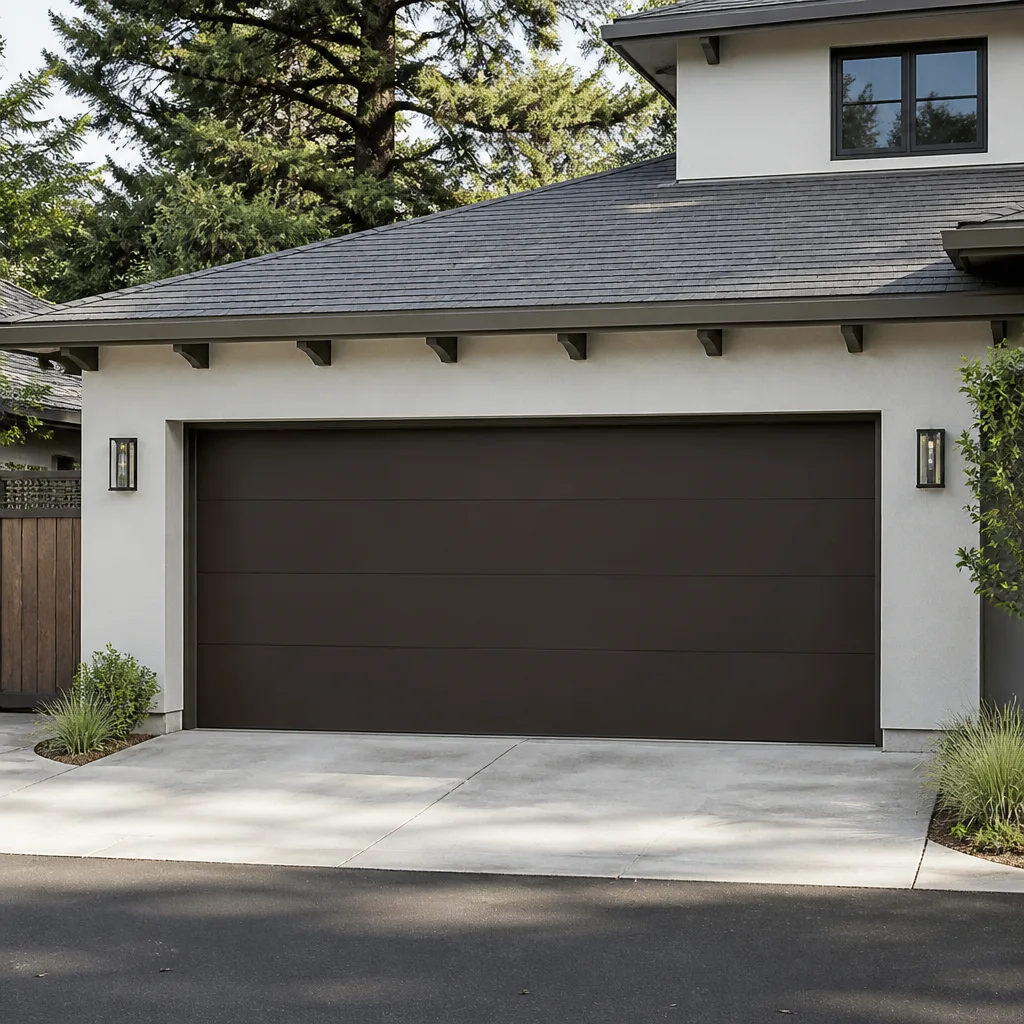 Modern flush
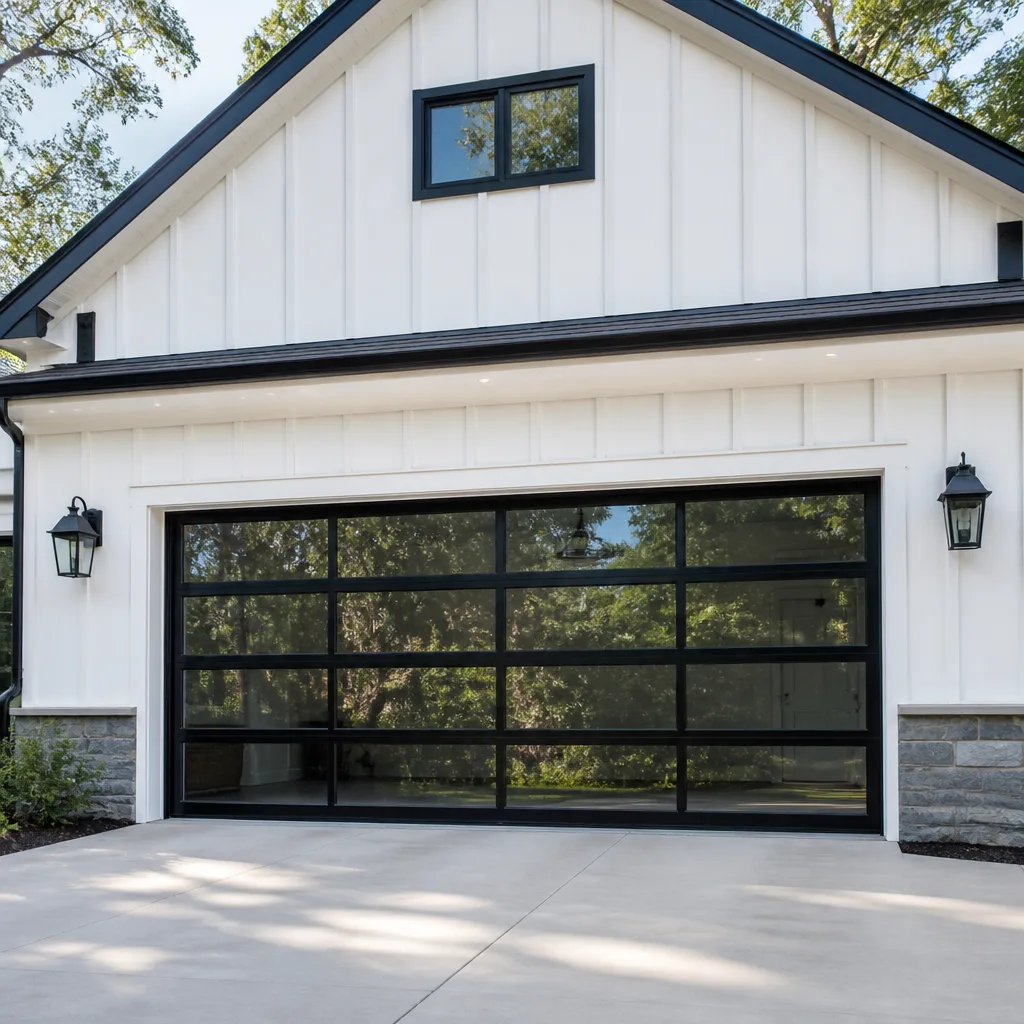 Full-view glass
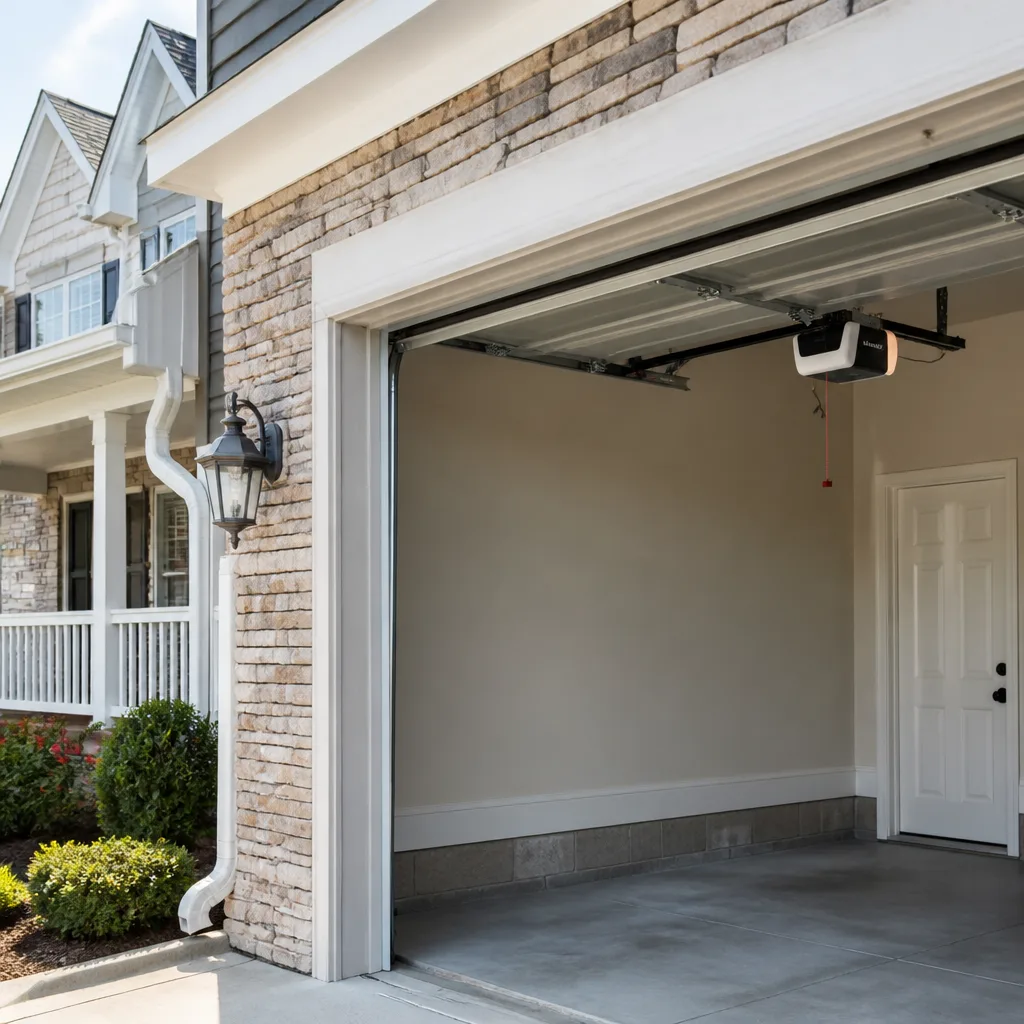 LiftMaster openers
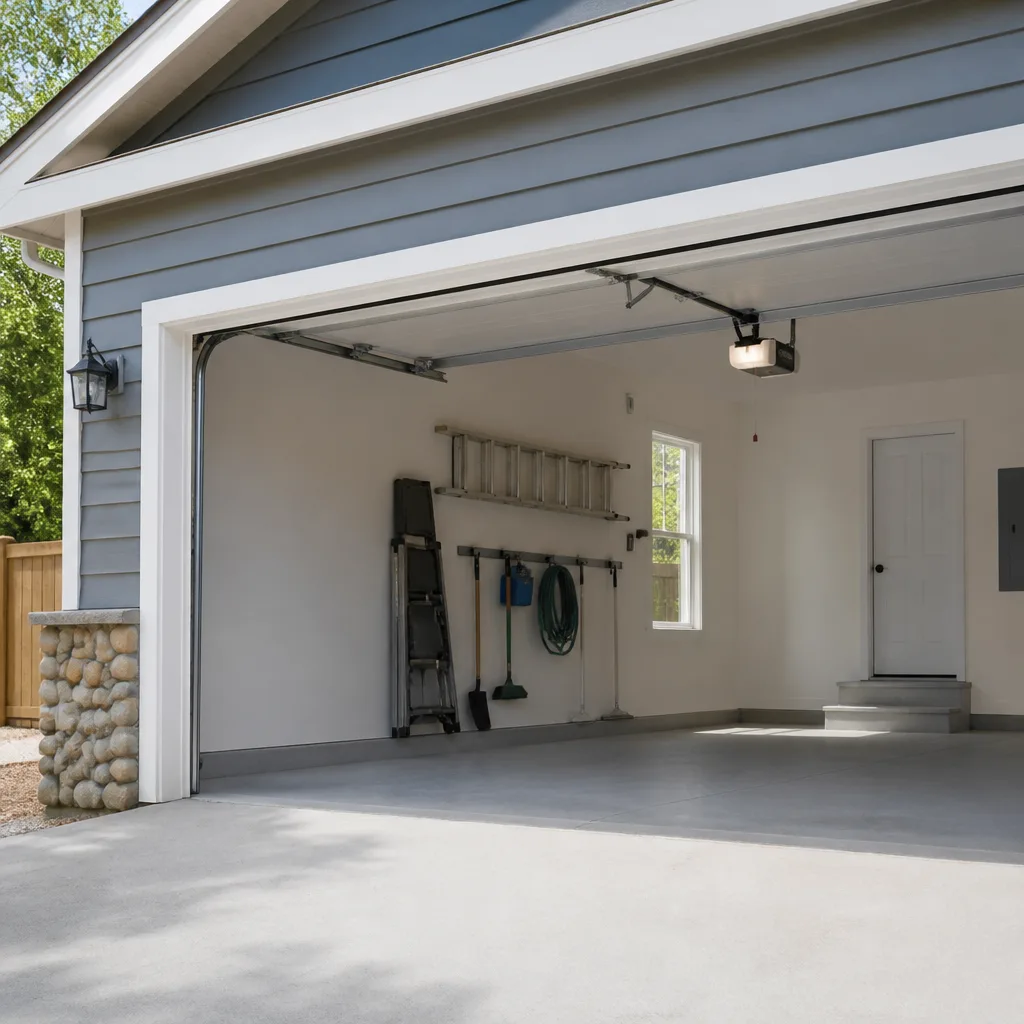 Chamberlain openers
Full 25-point door and opener safety check with every visit - springs, cables, rollers, tracks, and your LiftMaster or Chamberlain opener included
You get a price before we start. It does not change when the pro arrives.
Get your free estimateSeasonal Garage Door Care for Kendall: Year-Round Homeowner’s Guide
Most garage door maintenance advice you’ll find online was written for places that get buried in snow. It tells you to winterize, to watch for ice, to brace for the cold. In Kendall, that advice prepares you for weather that never arrives. What we actually get is a dry season, a hurricane season, and two transition months in between where temperatures swing hard enough to throw a tensioned spring out of balance. Each phase stresses your door differently, and a door that’s fine in January can be a liability by July. This guide maps real maintenance actions to Kendall’s actual climate calendar, so you’re inspecting and tightening for the weather you have, not the weather somebody in Minnesota has.
Quick Answer
In Kendall, garage door care follows a storm-driven calendar: inspect and tighten everything before hurricane season starts in June, keep the door manually operable and your auto-lock disengaged during active storm warnings, and do your spring replacements and opener upgrades during the dry season from November through April when conditions favor clean installation and curing. The two transition months around February and March need attention too, because a swing of 25°F or more in a single day can knock a spring out of calibration.
Styles & brands we work with
- Raised-panel steel
- Carriage house
- Modern flush
- Full-view glass
- LiftMaster openers
- Chamberlain openers
Table of Contents
- Why Standard Seasonal Advice Misses Kendall
- Pre-Hurricane Season Checklist: April and May
- Mid-Storm-Season Protocol: June Through October
- Post-Storm Inspection: What to Check Before You Touch Anything
- Dry Season: The Smartest Window for Real Work
- The February-March Cool Snap and Spring Tension
- Matching Opener Care to the Calendar
- What Changes Across Kendall’s Neighborhoods
Why Standard Seasonal Advice Misses Kendall
Garage doors fail for climate-specific reasons. In places with hard winters, the enemy is moisture freezing in the tracks and salt eating the hardware. In Kendall, the enemy is different. It’s the sustained humidity of the wet months, the wind loading of storm season, the UV exposure on seals and panels, and the temperature swings of the transition months. You can read ten “winterize your garage” articles and never encounter a single one of those problems.
Think about what your door actually endures here. For roughly half the year it sits in warm, humid air that keeps metal slightly damp and makes rubber seals go soft and tacky. For the other half it bakes under strong sun that dries out lubricant and fades paint. Then storm season arrives and the whole assembly gets tested against wind you don’t get in most of the country. That’s three entirely different kinds of stress on the same machine, and each one asks for a different maintenance response.
Here’s the practical upshot: the north’s “winter prep” checklist has no equivalent here, but a “storm prep” checklist absolutely does, and most Kendall homeowners have never sat down and built one. That’s what we’ll do in this guide, month by month.
- Dry season (November through April): the stable, low-humidity window. Best time for spring replacement, opener work, panel refinishing, and anything that needs clean conditions.
- Transition months (February and March): wide daily temperature ranges that stress tensioned components. Check calibration more often.
- Pre-hurricane (April and May): the build-up. Everything gets inspected, tightened, tested, and braced before the first named storm.
- Storm season (June through October): the period of highest risk. Maintenance becomes protective rather than restorative.
If you follow a northern seasonal guide in Kendall, you’ll spend your energy on problems you’ll never have. If you follow this one, you’ll spend it on the four phases that actually shape your door’s life.
Pre-Hurricane Season Checklist: April and May
The April and May window is the single most important maintenance period on the Kendall calendar. Before the first named storm of the season forms, you want every fastener tight, every moving part lubricated, and every structural support checked. This isn’t the time for major repairs (those belong in the dry season), but it is absolutely the time for inspection and minor tightening.
Walk through this checklist in order. It’s written so you can do most of it safely from the ground with the door closed, plus a few checks with the door fully open.
- Look at the tracks. Run your hand along each vertical and horizontal track looking for dents, bends, or sections that feel out of line. A track that’s already slightly bent before the wind hits it becomes a derailment waiting to happen.
- Check the fasteners. Every bracket, hinge plate, and track mount has a bolt or screw. Go along both sides and confirm each one is snug. Don’t over-torque; just make sure nothing rattles loose.
- Inspect the bottom seal and side weatherstripping. Worn seal allows wind-driven rain into the garage and puts more load on the door during gusts. If the seal is cracked, brittle, or hanging loose, plan to replace it before June.
- Test the balance of the door. Disconnect the opener and lift the door by hand about halfway. It should feel light and stay where you put it. A door that wants to fall or rise on its own has a spring problem, and a spring problem before storm season is a spring problem you fix now.
- Test the auto-reverse. Put a piece of scrap wood flat on the ground under the closing door. The door should reverse on contact. If it doesn’t, the opener’s force settings or safety sensor need attention.
- Inspect the bracing and reinforcement hardware. Many doors use struts or reinforcement bars across the widest panels to resist wind load. Check they’re secure and not showing rust at the attachment points.
- Open and close the door a few times and listen. Grinding, squealing, or a hard clunk at either end of the travel all point to something that needs attention before the season starts.
That’s the full pre-season pass. It takes under an hour and catches the majority of the issues that would otherwise turn into storm-season failures. If your inspection turns up a spring that’s lost tension, a track that’s visibly bent, or an opener that won’t reverse, book the repair now while the schedule is calmer.
Mid-Storm-Season Protocol: June Through October
Once hurricane season is underway, your maintenance posture changes. You’re no longer tightening and restoring; you’re preserving what’s working and preparing for power outages. Two things matter more than anything else during this window: keeping the door manually operable and knowing when to disengage automated locking hardware.
Power outages are the single most common garage door emergency in Kendall during storm season, and they’re entirely preventable if you’ve prepared the manual release. Here’s the protocol:
- Locate the manual release cord or handle. It’s typically a red cord hanging from the trolley on the opener rail. Make sure everyone in the household knows where it is and how to pull it.
- Understand what disengaging does. Pulling the release disconnects the door from the opener so you can lift it by hand. On most doors this is a two-hand operation: pull the release, then lift the door firmly.
- Disengage auto-locks when a storm warning is active. Many modern openers include an automatic deadbolt that drives into the track when the door is closed. If the power goes out with the auto-lock engaged, the door will not lift by hand. Check whether your opener (this is common on LiftMaster and Chamberlain units) has this feature, and disengage the auto-lock function when a storm warning is active so you retain manual control.
- Never force a door that resists lifting. If the door won’t lift by hand after you’ve released it, stop. Forcing it can bend panels or damage the opener. Call for service instead.
During active storm warnings, keep the garage clear of anything that could become airborne if wind gets through a damaged seal, and avoid opening and closing the door more than necessary. Storm-season protocol is about minimizing risk, not maximizing maintenance. Save the maintenance for after the storm.
One safety note that bears repeating: never attempt to adjust, tighten, or remove springs or cables during storm season. Those components are under extreme tension at all times, and a storm-season repair attempt on a tensioned spring is one of the most dangerous things a homeowner can do. Spring work belongs to trained technicians, no exceptions.
Post-Storm Inspection: What to Check Before You Touch Anything
After a significant wind event, give your door a careful visual assessment before using it. The mistake we see most often is a homeowner opening a wind-stressed door right after the storm, which can turn a recoverable misalignment into a bent track or a popped panel. Walk through this inspection with the door closed first.
- Look at the tracks for alignment. Stand back and sight down each vertical track. If either side has visibly bowed or shifted, don’t operate the door. A misaligned track is the most common cause of a door that comes off its rollers and jams.
- Check the bottom seal and perimeter seal. If wind drove through the bottom seal during the storm, it may be torn, curled, or separated from the panel. A damaged bottom seal lets water in and reduces the door’s wind resistance on the next event.
- Inspect the brace system for stress. Look for bent struts, popped rivets, or reinforcement bars that have shifted out of place. Stress on the braces means the panels themselves absorbed wind load, and that’s worth a trained inspection.
- Check the springs and cables from a distance. Look for a visibly sagging spring on one side, or a cable that’s come off its drum. If you see either, don’t operate the door and don’t touch anything. Call for service.
- Listen before you run it. With the door still closed, engage the opener briefly and listen for new sounds: scraping, grinding, or a loud pop. Any of those means stop and call.
- Test the auto-reverse after every storm. Safety sensor alignment can shift when panels flex under load. If the door doesn’t reverse on contact, the setting needs adjustment before household use resumes.
The goal of post-storm inspection is assessment, not repair. A door that looks fine after a storm usually is fine. A door that shows any of the signs above deserves a trained eye before you open it again. That’s when a professional garage door repair visit is the smart call, not the last resort.
Dry Season: The Smartest Window for Real Work
The dry season in Kendall, roughly November through April, is when the real work gets done. It’s not because the work is impossible at other times, but because the conditions support better outcomes. Lower humidity means adhesives cure properly, fresh paint and finish adhere the way they should, and installation work doesn’t fight the environment.
Here’s what belongs in the dry-season window:
- Spring replacement. A new torsion spring should be installed and calibrated when temperature and humidity are stable. The calibration you set in November will hold better into storm season than one set during a humid June day.
- Opener upgrades. Replacing a legacy opener with a modern smart unit (many Kendall homeowners upgrade to LiftMaster or Chamberlain systems with app control) is dry-season work. Clean installation conditions mean the sensors and wiring go in reliably.
- Panel refinishing or replacement. UV exposure fades and chalks exterior paint and finish. If panels are going to be refinished or replaced, the dry window is when the finish will cure and bond properly. This is also the right time to replace individual damaged panels rather than patch them.
- Seal and weatherstrip replacement. New bottom seals and side weatherstripping set better in dry conditions and give you the full storm season of protection from the fresh install.
- Track realignment and hinge replacement. Bigger adjustments that will see use for the next storm season belong here, not in June.
Timing matters more than people think. A spring calibrated on a humid August afternoon can behave differently by the time temperatures cool in January. A painted panel installed in rainy season may not cure the way it would have in December. When we schedule garage door spring repair, we pay attention to the calendar for exactly this reason.
The dry-season window is also the right time to call for a full-door consultation if you’re considering a replacement. Installation is measured, ordered, and scheduled in advance, and the dry months give you the shortest lead time and cleanest install conditions. If you’re thinking about a new door, get the measurement done in the dry season and schedule the install for the same window.
The February-March Cool Snap and Spring Tension
For about four to six weeks in late winter, Kendall gets its most variable weather: warm days, cool nights, and daily temperature swings that can span 25°F or more. For most home systems, that’s a nuisance. For a tensioned garage door spring, it’s a real test. Metal expands and contracts with temperature, which means a spring that was calibrated perfectly in January can sit miscalibrated by mid-February.
You won’t always notice the miscalibration by sound alone, but you’ll notice these signs:
- Uneven travel: the door rises or lowers noticeably faster on one side, or hangs briefly at the top or bottom.
- Slamming or hard stops: the door drops the last few inches hard, or hits the floor with a louder thud than usual.
- Straining opener: the opener sounds like it’s working harder, and the door moves slower than it did in January.
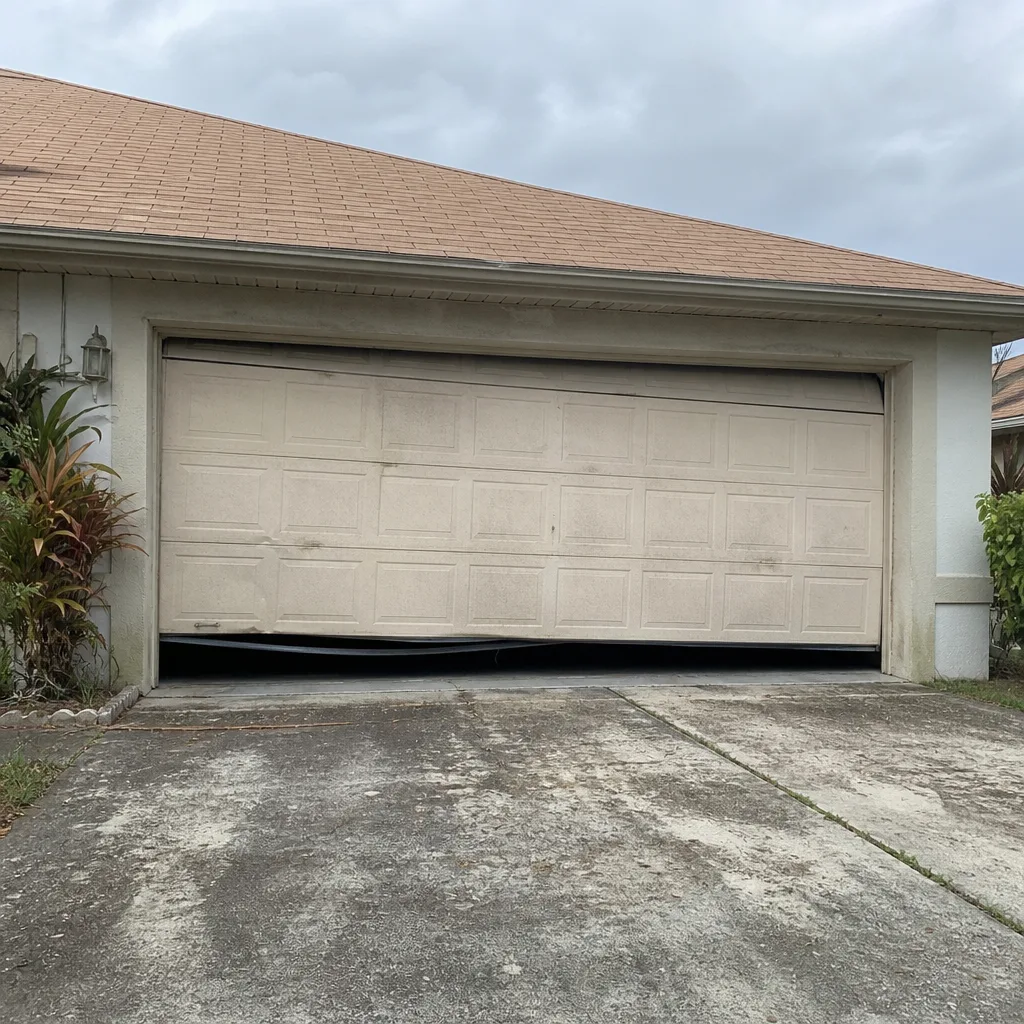
- Visible gap: the door doesn’t meet the floor evenly on both sides when closed.
After any week with a wide temperature range, do a quick check: open and close the door, listen and watch. If the door behaves normally, no action needed. If any of the signs above appear, get the balance checked. A trained technician can recalibrate tension so both springs are carrying equal load, which is what keeps the door level and the opener happy.
This is also the month to check the safety reverse function and the safety sensor alignment. Temperature swings can shift sensor brackets just enough to throw the beam off line. That’s a brief check and a quick adjustment, and it’s worth doing during the cool snap.
One important note: the cool snap is not the season to attempt spring adjustment yourself. Torsion springs are under extreme tension, and the calibration work is far more dangerous than it looks. Even experienced technicians handle it with the proper tools and knowledge. If your door shows the signs above, book a service visit rather than attempting to turn the tension yourself.
Matching Opener Care to the Calendar
The opener has its own seasonal rhythm, slightly different from the door’s. Most of what an opener needs is preventive, and pairing it with the climate calendar keeps it working through the periods that stress it most.
April and May: test the auto-reverse and safety sensors as part of your pre-hurricane pass. This is also the time to test the manual release and confirm your opener’s auto-lock disengagement works. If your opener is a LiftMaster or Chamberlain with app-based control, confirm the app still connects and the remote access works before storm season, since you may rely on it if you’re traveling during a storm.
June through October: keep the opener’s battery backup (if it has one) fresh. Many modern Genie, LiftMaster, and Chamberlain openers include battery backup so the door will still open during a power outage. Test that backup function at the start of storm season. Also, clear away any debris that accumulates near the sensor lenses outside the opener housing.
November through April: this is the right window for a full opener tune-up or upgrade. If you’re running a legacy Craftsman or Raynor opener and considering moving to a smart system, do it now. The technician can test the sensor wiring, verify the belt or chain condition, and set the force limits properly in stable conditions.
February and March: after the cool snap, run a quick opener test. Open and close the door two or three times, and listen for grinding, a hesitation, or an inconsistent travel speed. If you notice anything, call for garage door opener repair rather than letting a small issue grow into a full opener replacement.
Opener maintenance is genuinely simpler than door maintenance, but the timing matters. Clearing a sensor issue in the dry season takes fifteen minutes. Clearing the same issue in the middle of storm season while the power’s flickering takes more time and more patience.
What Changes Across Kendall’s Neighborhoods
Kendall isn’t one uniform neighborhood, and the maintenance priorities shift subtly across the area. The big variable is tree cover and lot orientation. Homes with heavy shade have slightly different humidity and debris patterns near the door, and doors facing the sun run hotter and fade faster than those in shade.
In neighborhoods with older housing stock, doors are more likely to have legacy openers (Raynor, Craftsman, older Genie units) and older single or double springs that are already near the end of their service life. That’s where we see spring failures cluster, and it’s where the cool-snap checks matter most. In newer communities, doors are more likely to be on modern smart openers, and the maintenance emphasis shifts to testing sensor alignment, app connectivity, and the auto-lock during storm warnings.
The other variable that comes up across Kendall is driveway and door orientation. Doors that face direct afternoon sun sit in a hotter micro-environment, which means seal material degrades faster and finish fades sooner. That’s not a problem unique to Kendall, but the intensity of the sun here means it shows up sooner than it does in many other parts of the country.
We serve homeowners across the area, and the pattern that holds is this: shaded or older doors need more frequent mechanical checks; sun-exposed or modern doors need more frequent finish and sensor checks. Neither is worse, they just need different attention.
Common Mistakes to Avoid
- Following a northern winter-prep guide in Kendall. It sends you chasing ice, freeze damage, and salt problems you’ll never have. Spend that time on storm-season prep and cool-snap checks instead.
- Opening the door right after a storm without inspecting it first. A wind-stressed door that looks fine can bend a track or pop a panel on the first operation. Inspect before you hit the button.
- Leaving the auto-lock engaged during a storm warning. If the power goes out, the door won’t lift by hand. Disengage the auto-lock before a named storm is expected.
- Scheduling spring work in the middle of storm season. Dry season is the smarter window. The calibration holds better, and you’re not rushing work around storm threats.
- Ignoring cool-snap symptoms in February and March. A door that slams or hesitates during a big temperature swing is telling you the balance is off. Get it checked before the imbalance causes more damage.
- Attempting spring or cable work yourself. These components carry enough stored energy to cause serious injury. The most dangerous moment is the one before you realize how much tension is there.
- Skipping the auto-reverse test after every storm. Safety sensor alignment shifts under load. A door that fails auto-reverse is a real hazard, especially for kids and pets in the household.
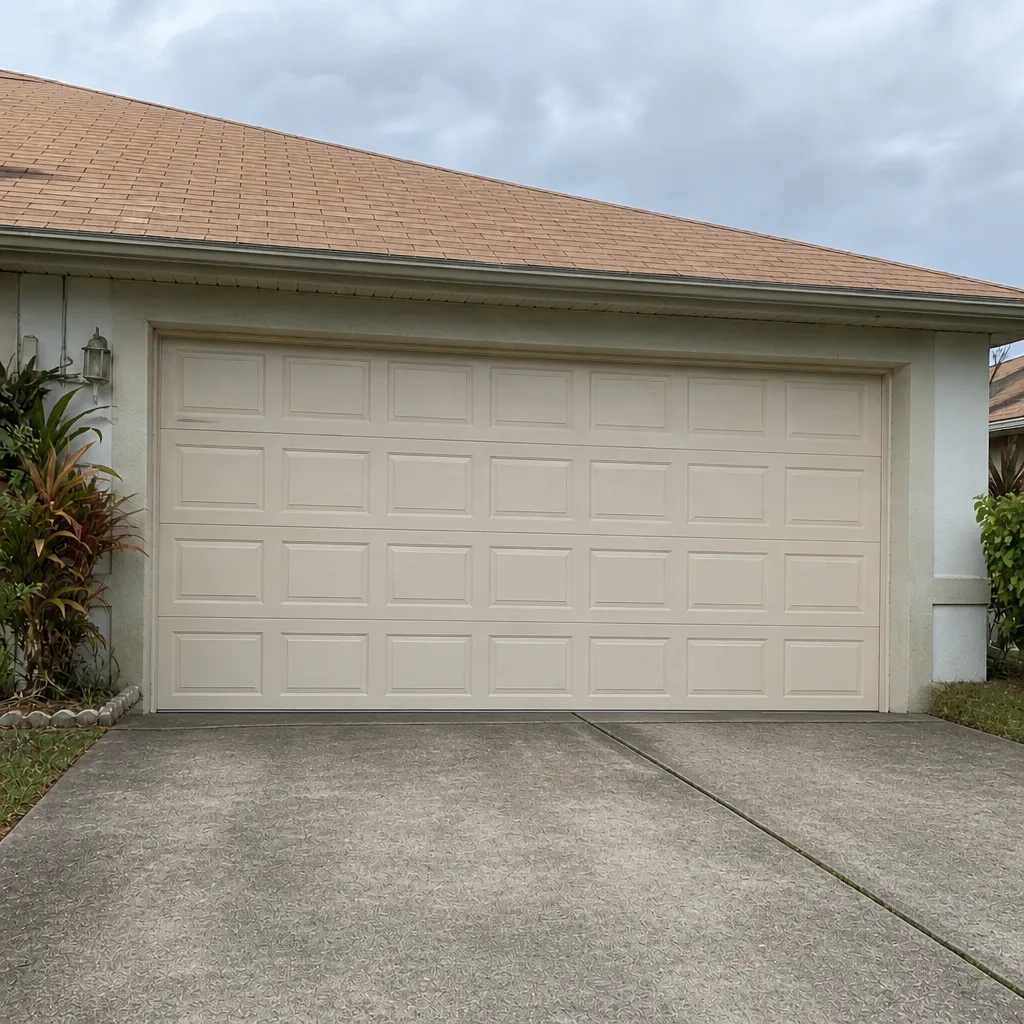
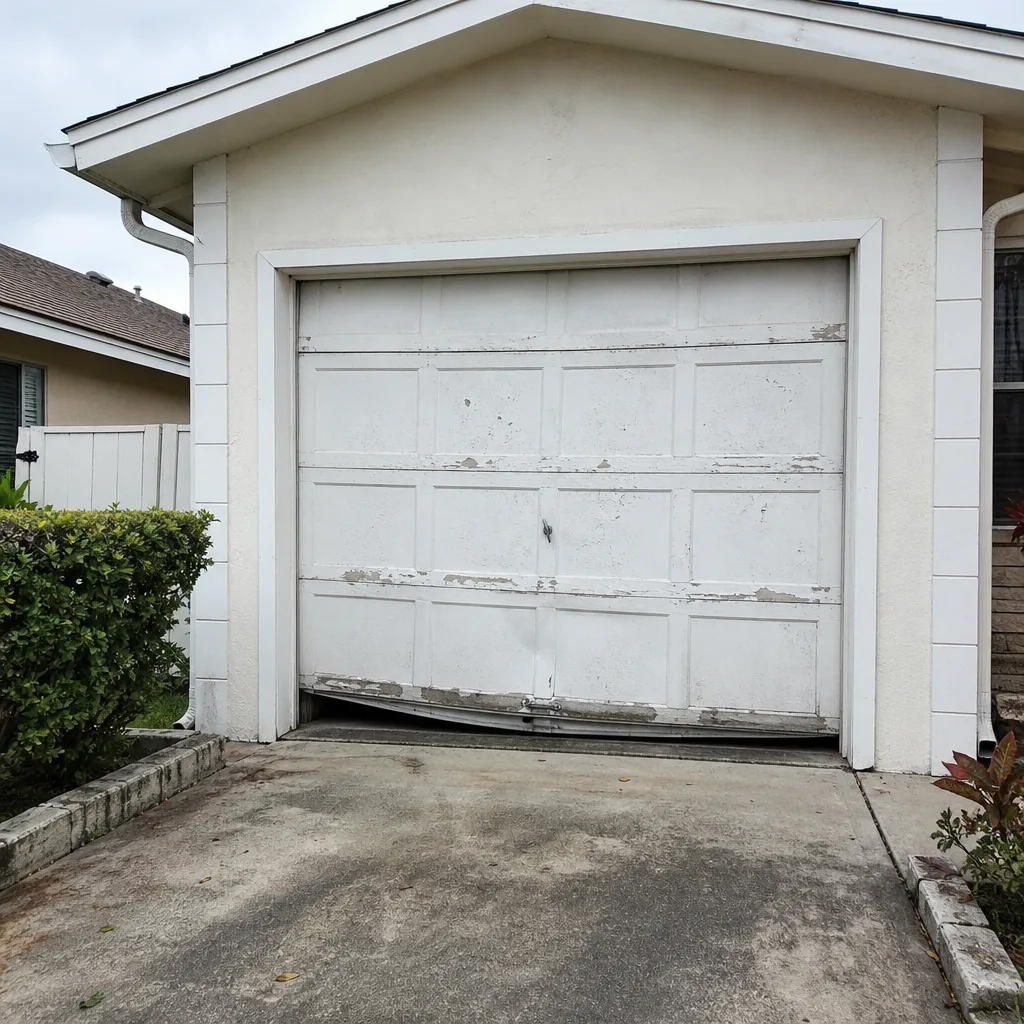
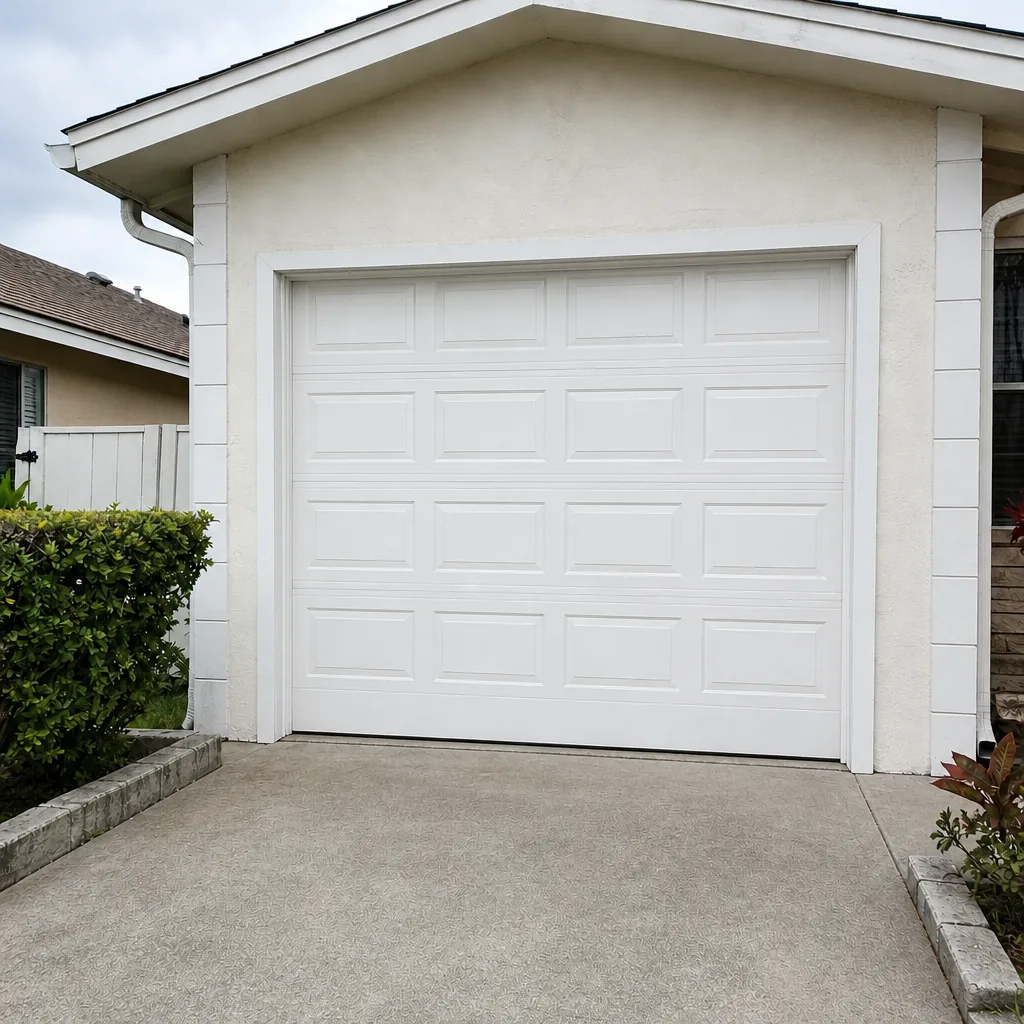
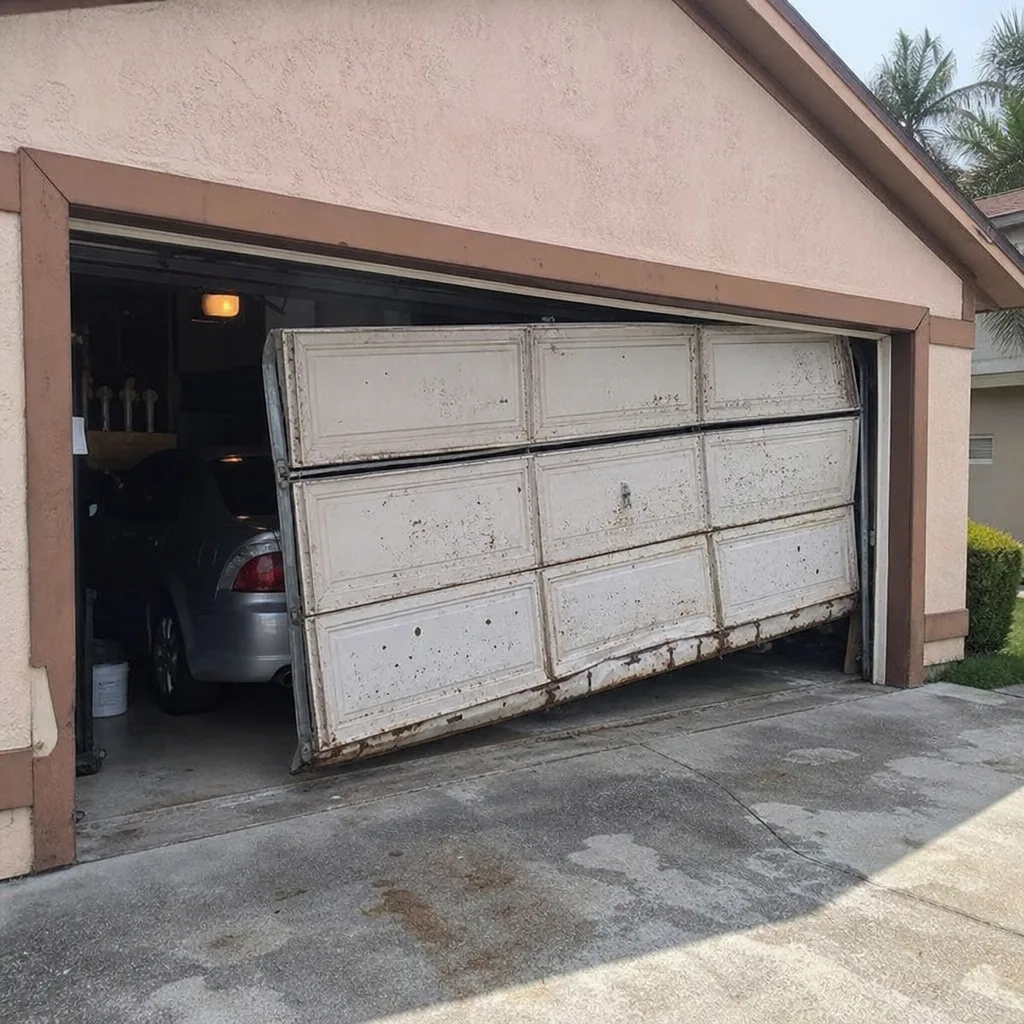
See the difference
 Before
 After
 Before
 After
 Before
 After
When to Call a Professional
Some seasonal door care you can handle yourself: visual inspections, tightening loose fasteners, cleaning sensor lenses, testing auto-reverse, and knowing where the manual release is. Know the line where the work needs a trained technician. Call when a spring has lost tension or snapped, when a cable has come off its drum, when a track is visibly bent or out of line, when the door won’t balance or ease back into a level position, when the opener won’t reverse on contact, when the auto-lock is stuck, or when a post-storm inspection turns up panel, brace, or hardware damage. For spring work specifically, the tension stored in a garage door spring is enough to cause real injury, and that work belongs to someone who does it daily.
Kendall Garage Door Repair Co offers free estimates in Kendall. Call (844) 484-9800 and we’ll take it from there. Our technicians have up to 10 years of experience on the systems most common in Kendall homes, and we’ll bring the right tools and the right knowledge to whatever your seasonal inspection turns up.
Frequently Asked Questions
The dry season, roughly November through April, is the best window. Conditions are stable, humidity is lower, and the calibration you set will hold better into storm season. That said, if a spring has failed, don’t wait for the dry season; a snapped spring leaves the door inoperable and potentially unsafe to open, and a professional garage door spring repair call handles the work safely whatever the month. A matched pair is usually replaced together since both springs have taken the same stress. Call (844) 484-9800 for an exact quote; estimates are free.
Pull the manual release cord on the opener trolley, then lift the door by hand. Most doors will lift once released. If your opener has an automatic deadbolt lock (common on many modern units), release the auto-lock from its manual override, or plan on disengaging it before a storm is expected. If the door won’t lift by hand after releasing, don’t force it: call for service. We answer 24/7, and this is the kind of call we get during storm season.
Yes, but the routine is lighter. New doors still benefit from the pre-hurricane checklist in April and May: track inspection, fastener tightening, bottom seal check, auto-reverse test, and manual release test. Newer doors are less likely to have spring issues, but the seals and sensors still need checking. If you have a smart opener from LiftMaster or Chamberlain, also confirm the app and remote access work before storm season, since you may rely on remote operation during a storm.
Temperature swings in February and March, sometimes 25°F or more in a single day, change the tension in your springs and cause the door to behave unevenly. You’ll hear a harder stop at the bottom, a slightly slower rise, or a hesitation at the top. That’s a sign the balance has shifted. A trained technician recalibrates the tension so both springs carry equal load, which fixes the sound and the wear. Book a call if you notice any change during the cool snap.
Test auto-reverse once a month in normal conditions, and again after every significant storm. Put a piece of wood flat on the ground under the closing door; the door should reverse on contact. If it doesn’t, the force or sensor settings need attention, and the door should be serviced before further household use. It takes a minute and catches a real hazard. Call (844) 484-9800 for a service visit if the test fails.
No. A bent track is one of the more dangerous repair situations to handle on your own, because the door panel carries weight and tensioned hardware while you work. Small bends can often be corrected by a technician, but forcing them yourself can cause the rollers to pop out or the spring tension to shift. Inspect for visible bends after a storm, then stop and call. Our technicians can realign or replace the track safely, and this is the kind of post-storm call that comes through standard channels.
The Bottom Line
Kendall’s climate doesn’t have four seasons. It has a dry season (November through April) that’s the right window for real work like spring replacement, opener upgrades, and refinishing; two transition months (February and March) that need cool-snap checks on spring tension; a pre-hurricane inspection window (April and May) for track, fasteners, seals, auto-reverse, and manual release; and a storm season (June through October) where the job is preserving what works and keeping the door manually operable. Add a post-storm inspection after any significant wind event, and you’ve got the full calendar. The northern guides can stay in the north. Your door has its own schedule to keep.
Whether you need a spring check during the cool snap, a full inspection before hurricane season, or a new opener installed in the dry window, Kendall Garage Door Repair Co covers the whole lifecycle of your door: repair, opener diagnostics, and full installation. Call (844) 484-9800 for a free estimate. We answer 24/7. Fast dispatch from 7am to 7pm, Sunday through Friday. If your door fails on a Saturday, we’re closed, but call and we’ll get you booked for Sunday.
Written by the team at Kendall Garage Door Repair Co.