
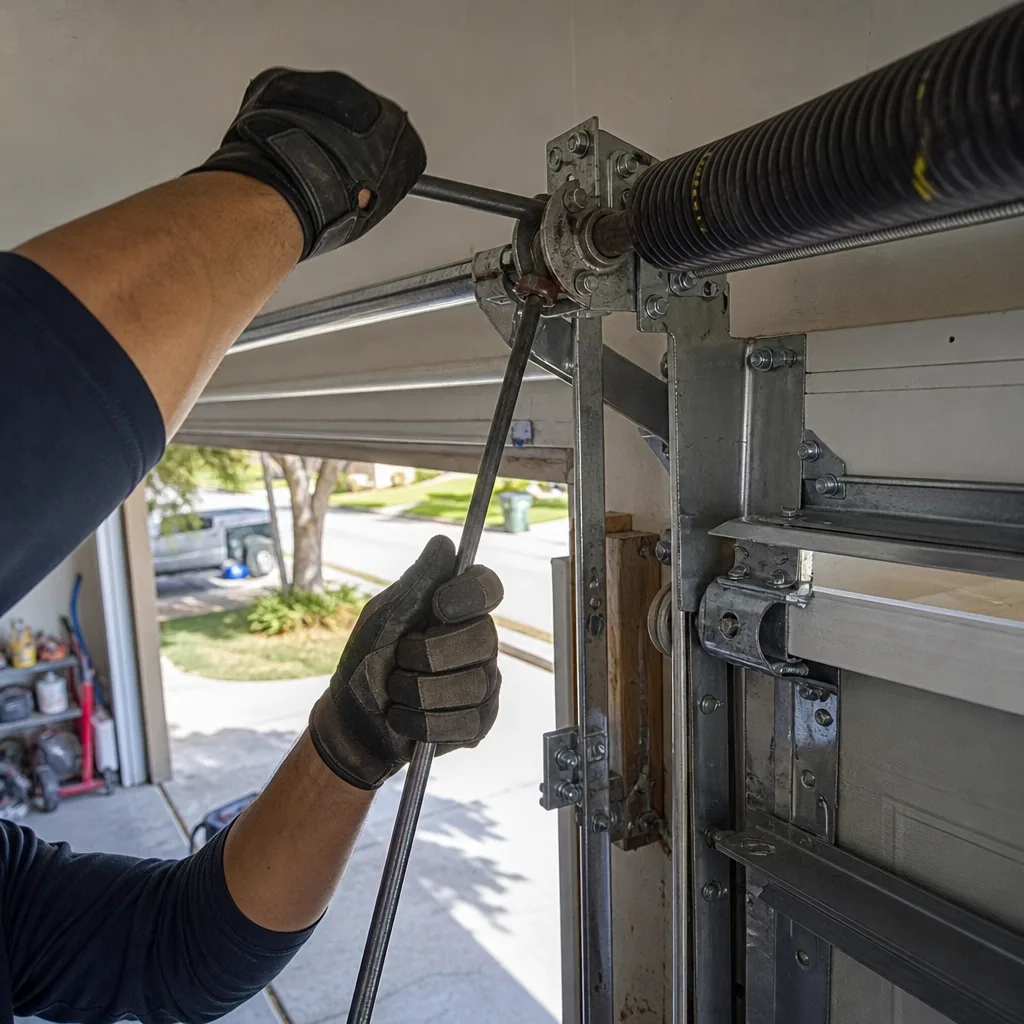
Last updated November 21, 2026
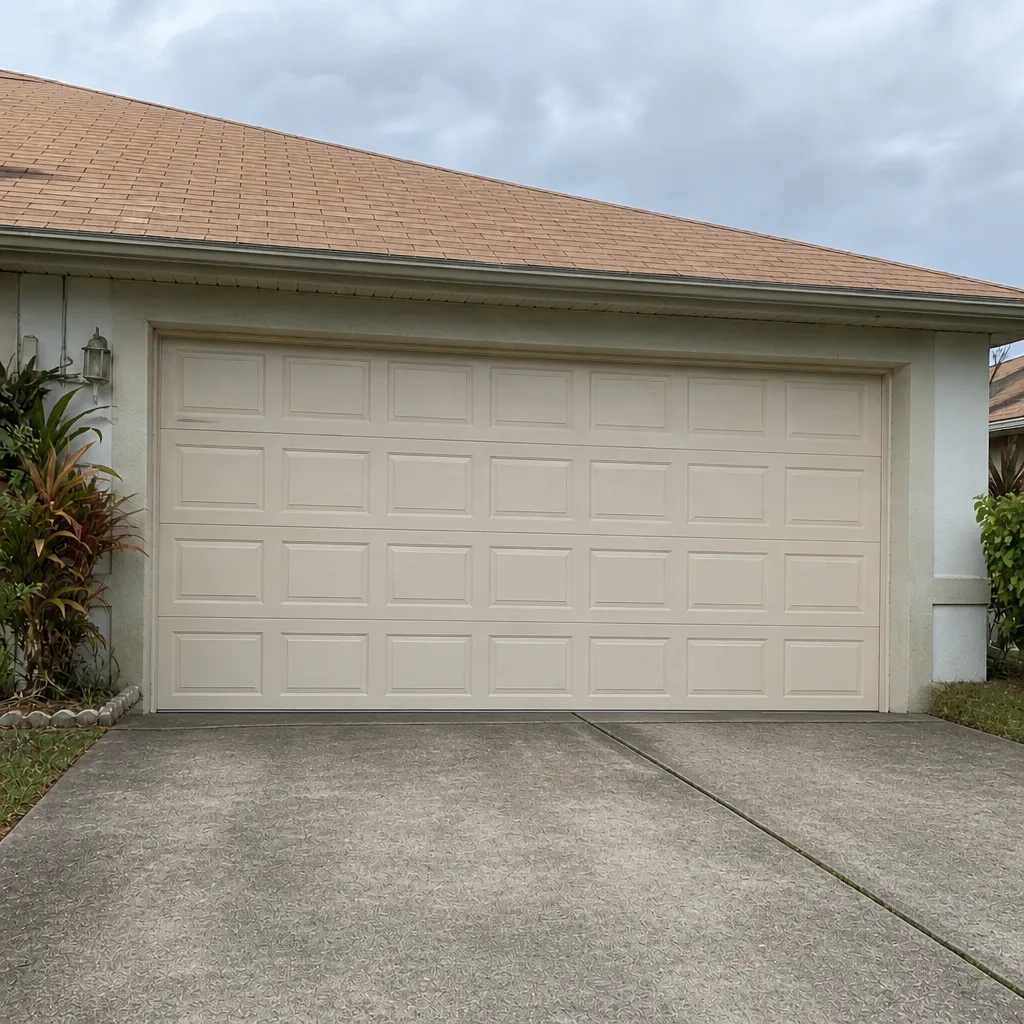
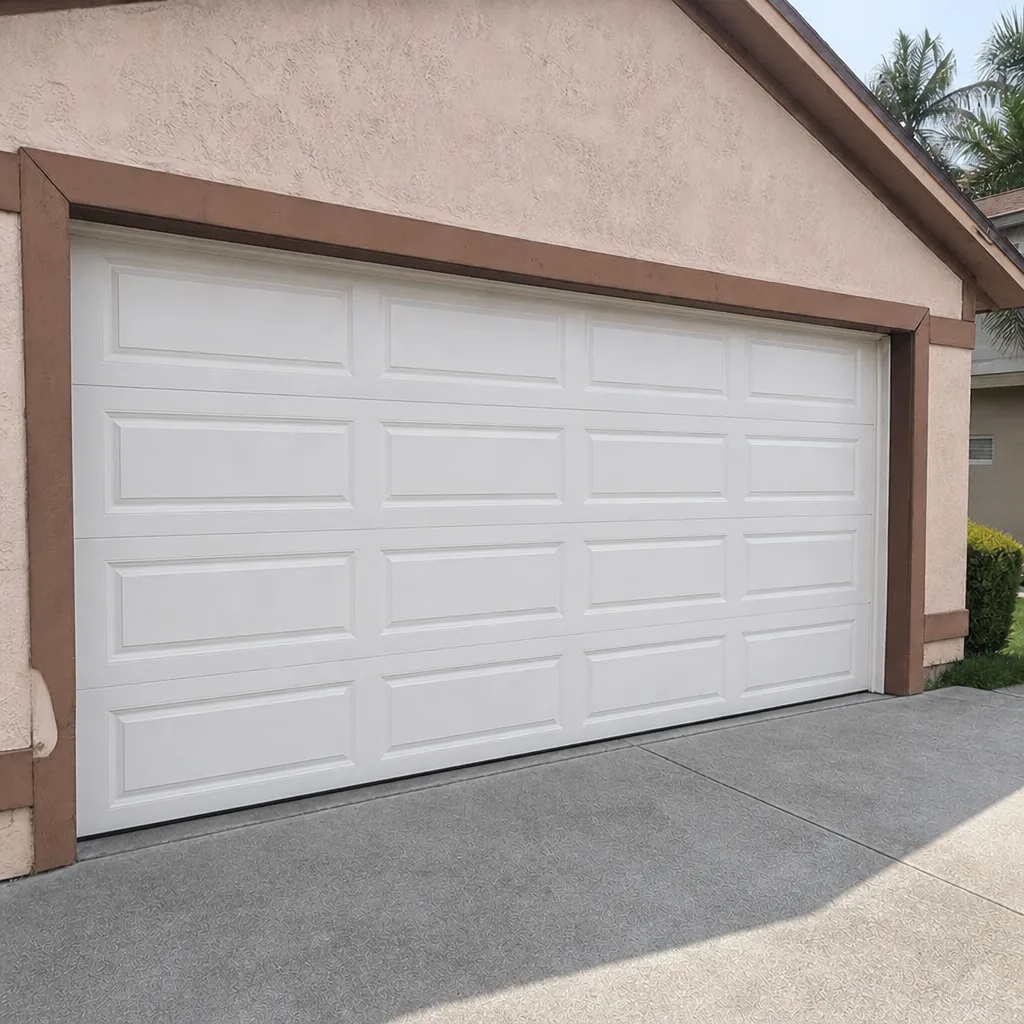
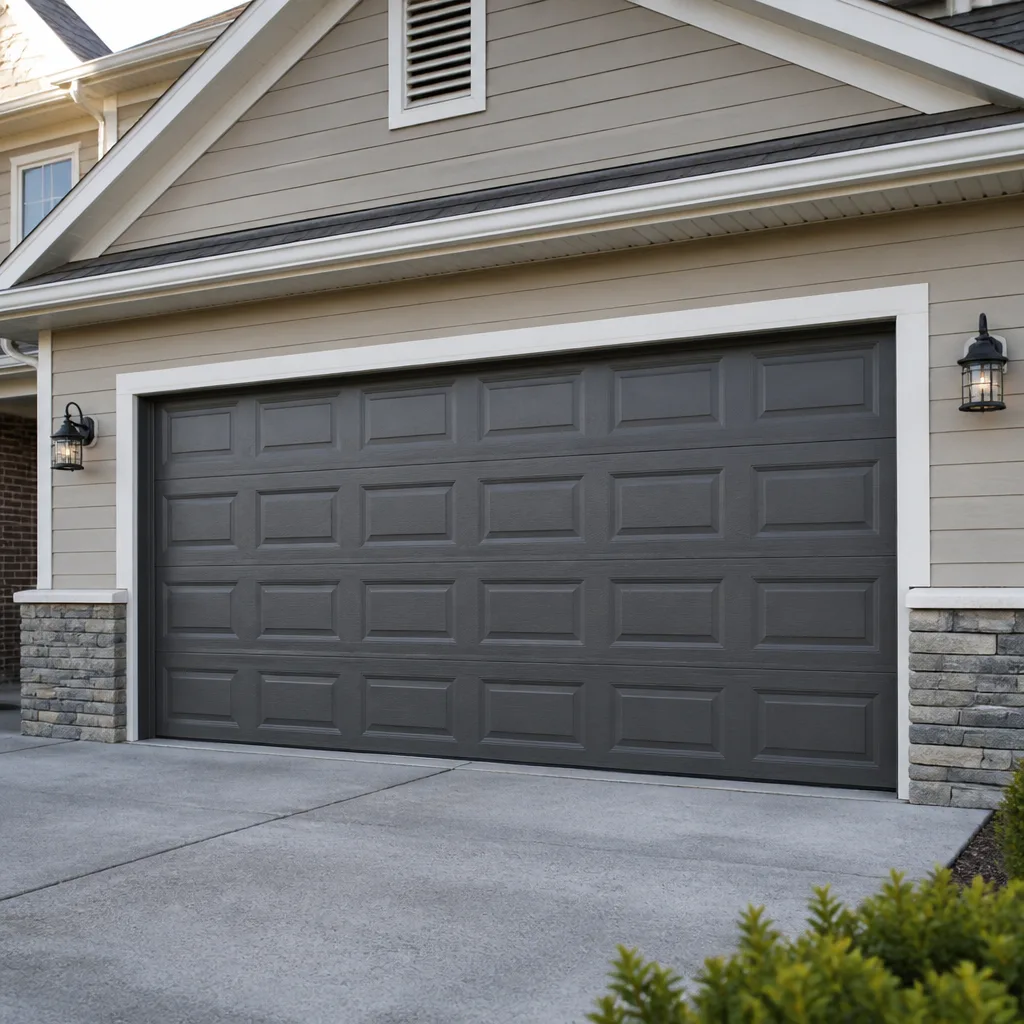 Raised-panel steel
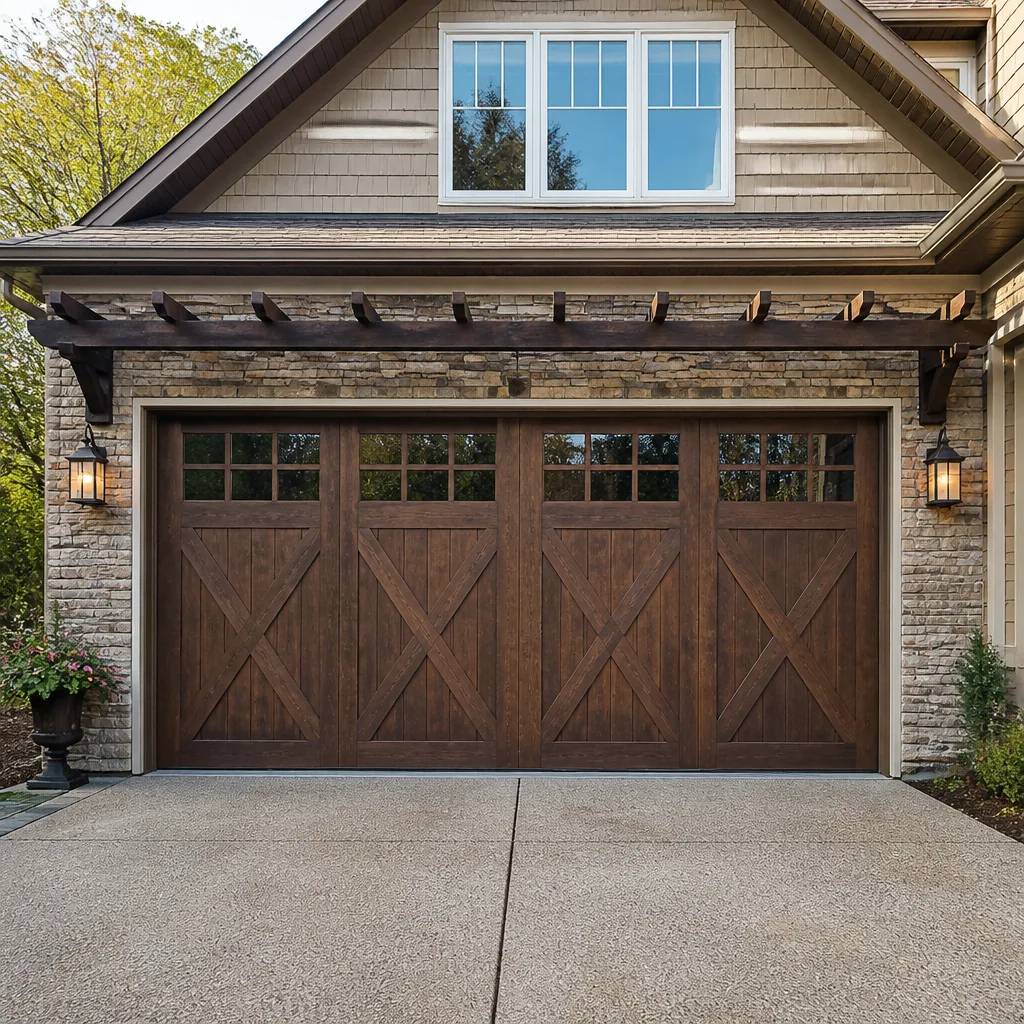 Carriage house
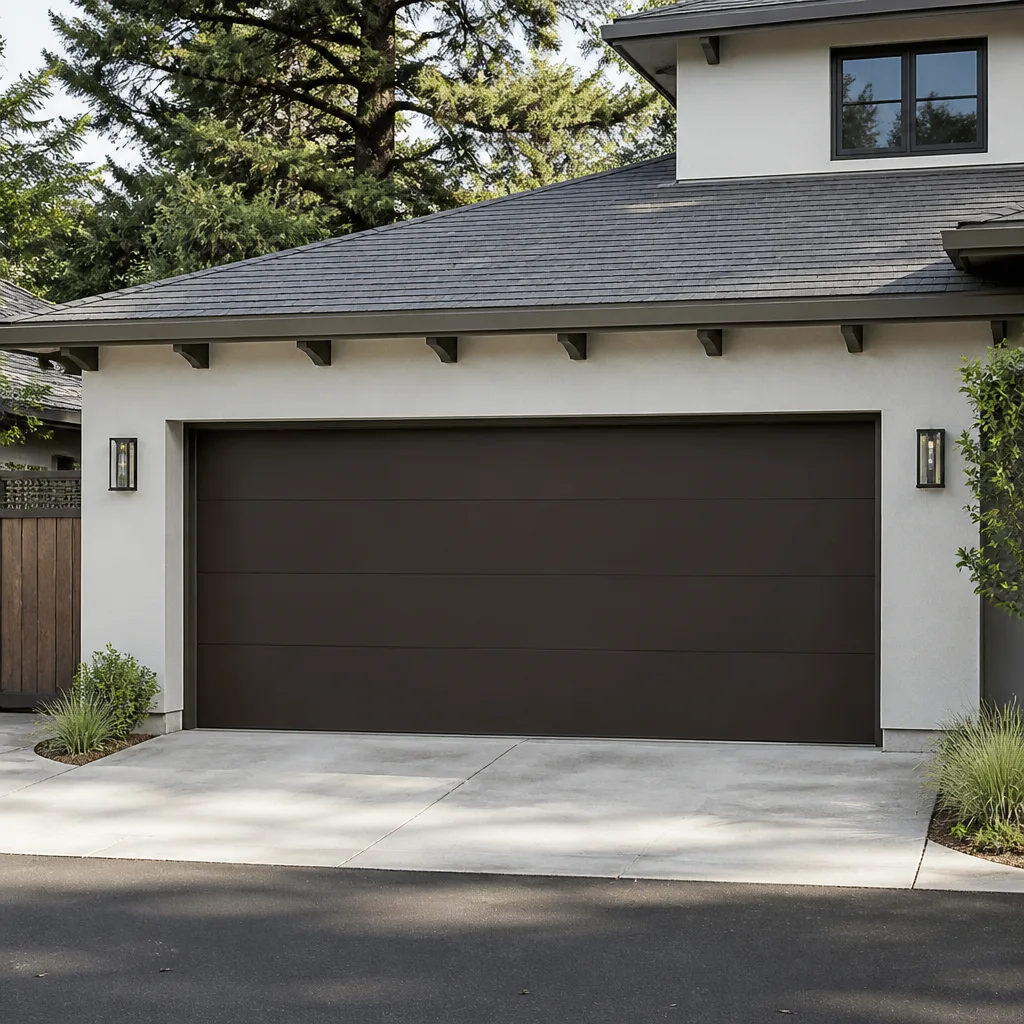 Modern flush
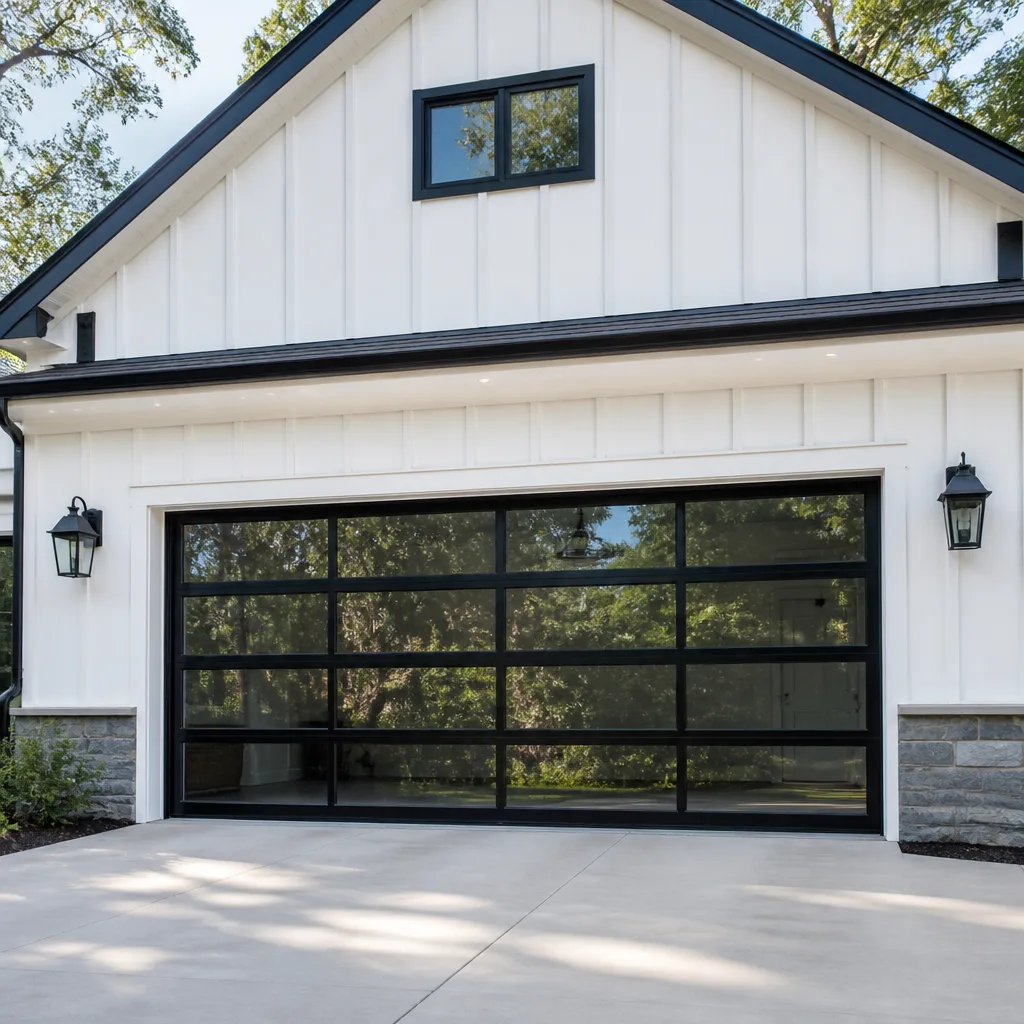 Full-view glass
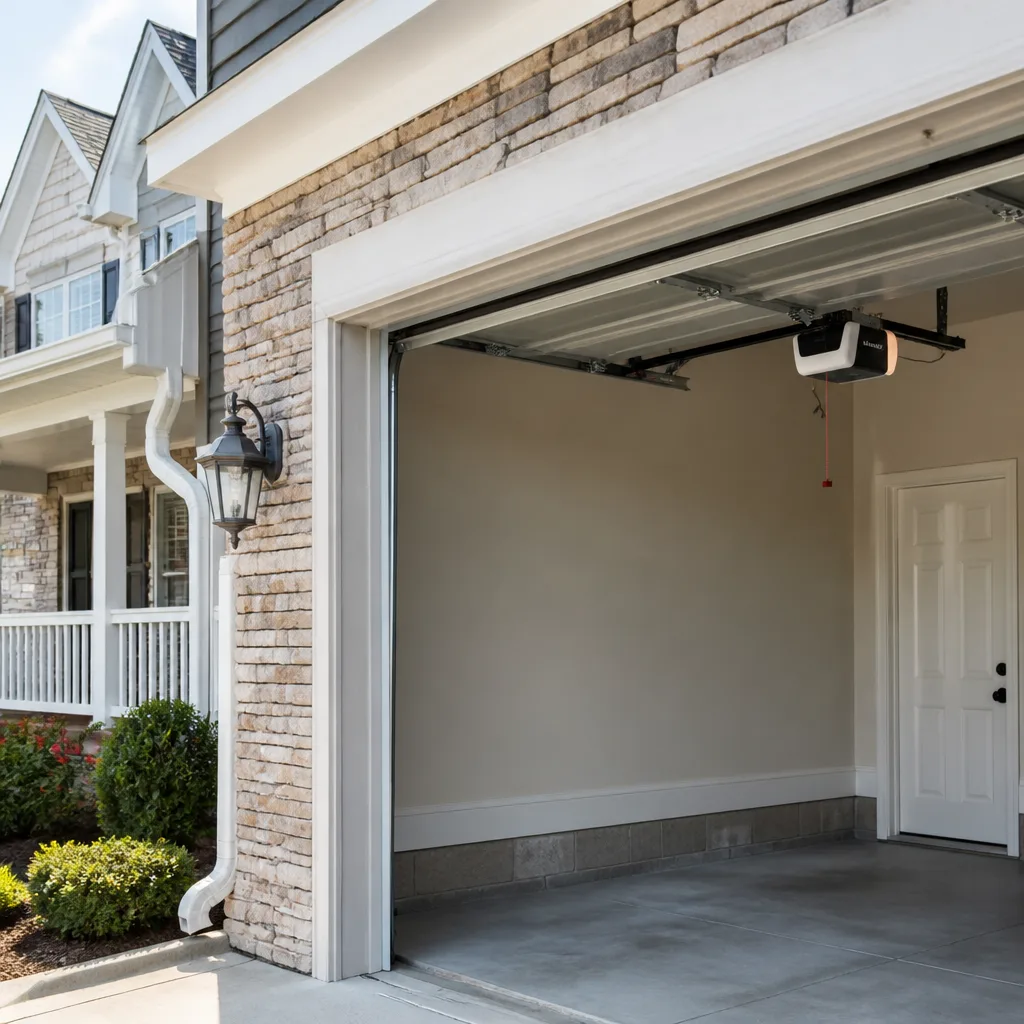 LiftMaster openers
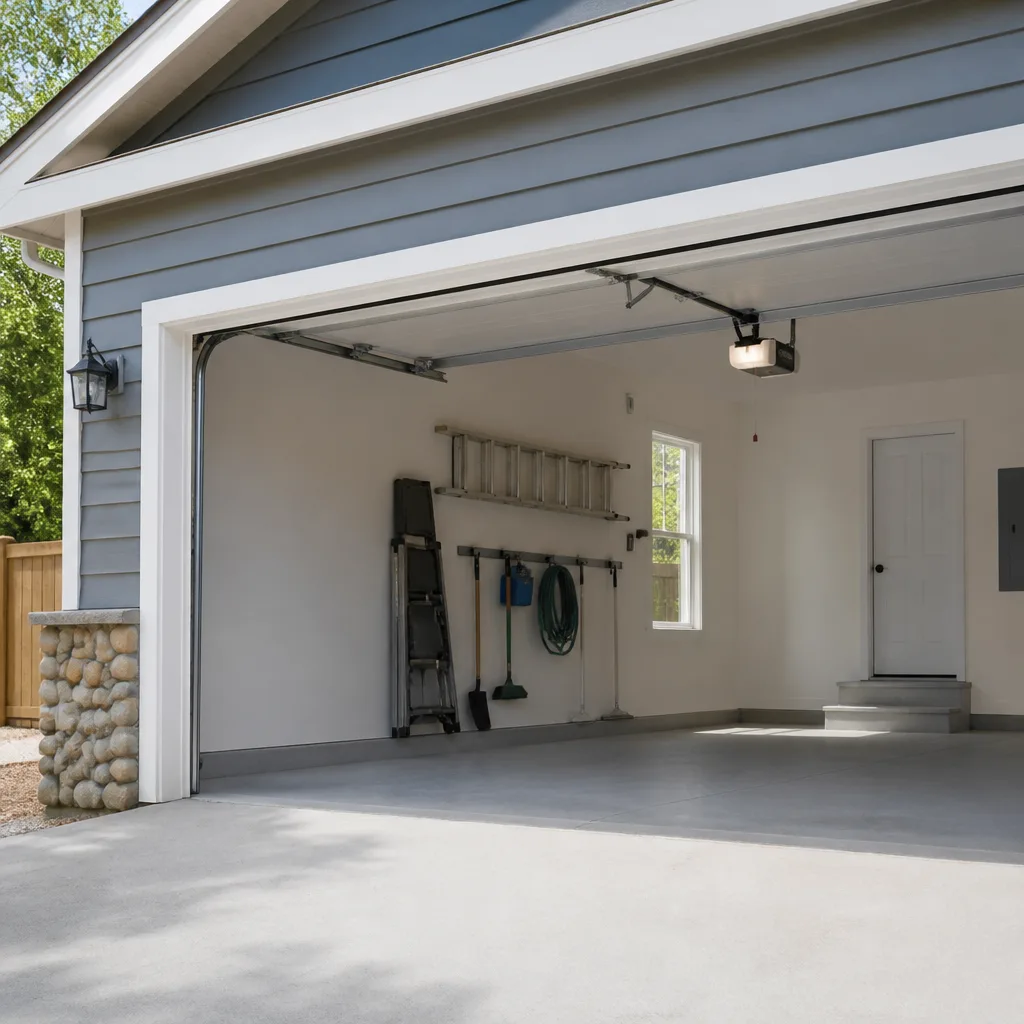 Chamberlain openers
Full 25-point door and opener safety check with every visit - springs, cables, rollers, tracks, and your LiftMaster or Chamberlain opener included
You get a price before we start. It does not change when the pro arrives.
Get your free estimateGarage Door Emergency Preparedness Guide for Kendall Homes
Most Kendall homeowners prepare for a hurricane by thinking about wind. The smarter preparation is about what happens after the wind arrives and the door stops working. Here’s the part many people miss: a garage door that fails during a storm often fails because someone tried to operate it by hand while it was already under load. A door bent out of its track during a power outage is a repair you didn’t need on top of the storm. This guide covers two things: how to get your door storm-ready before a warning is issued, and exactly what to do, and not do, when it fails mid-storm or right after. We’ll walk through the emergency release cord, manual locking under wind load, the partially-open-door scenario, post-storm safety checks, and the tools worth keeping in your Kendall garage so a small fix doesn’t turn into a long wait.
Styles & brands we work with
- Raised-panel steel
- Carriage house
- Modern flush
- Full-view glass
- LiftMaster openers
- Chamberlain openers
Quick Answer
Emergency garage door preparedness in Kendall comes down to two skills: locking and securing the door before a storm so it holds under sustained wind without power or an opener, and knowing how to release and operate it safely afterward without bending tracks or cables. The single most important rule is never to force a door that’s under wind load or already off-track. Engage the release cord only when the door is fully closed and at rest, secure it manually before the storm, and inspect the door for structural signs of damage before you touch anything after the storm passes.
Table of Contents
- Why Kendall Homes Need a Garage Door Emergency Plan
- How to Use the Emergency Release Cord Without Causing a Second Failure
- Pre-Storm Protocol: Locking Your Door Manually Under Wind Load
- What to Do When the Door Is Partially Open and the Power Goes Out
- How to Assess Your Door’s Safety After a Storm
- What to Keep in the Garage So a Minor Repair Doesn’t Wait for Days
- Opener and Spring Checks That Belong on Your Storm Checklist
- Common Mistakes to Avoid
- When to Call a Professional
- Frequently Asked Questions
- The Bottom Line
Why Kendall Homes Need a Garage Door Emergency Plan
Kendall sits in a part of South Florida where hurricane season runs from the start of June through the end of November, and the storms that reach us don’t always announce themselves days in advance. A garage door is the largest moving opening on a house. Under sustained wind it’s also the most vulnerable. When a door loses power, comes off its track, or won’t close during a storm, the problem compounds fast: the opening is exposed, the house is less secure, and the fix is harder than it would have been an hour earlier.
A written plan matters more here than in places where severe weather is rare. The reason is simple. In an emergency, people act on instinct, and instinct on a garage door is usually wrong. Pulling a release cord while the door is up, forcing a door that’s binding, or trying to muscle a bent panel back into place all create the kind of secondary damage that turns a quick repair into a full track or spring job.
Here’s what a real emergency plan covers:
- How to secure the door manually before a storm when the opener and power aren’t available.
- How to use the emergency release cord safely, and the exact condition under which you should not touch it.
- What to do if the door is stuck partway open as a storm approaches.
- How to inspect the door for structural danger after the storm before you try to move it.
- What tools and hardware to keep on hand so a minor issue doesn’t require an indefinite wait.
This guide is written from Kendall and for Kendall. We work on residential garage doors here every week, across every common manufacturer, and the failure patterns we see during and after storm season are consistent enough to plan around. Our technicians have up to 10 years of experience with the door and opener systems most Kendall homes actually have installed. For the full scope of what we handle, see Kendall Garage Door Repair Co.
How to Use the Emergency Release Cord Without Causing a Second Failure
The emergency release cord is the red handle that hangs from the opener trolley. Pulling it disconnects the door from the opener so you can lift it by hand. It’s a safety feature, and it works well when used correctly. The trouble is that most people pull it in exactly the wrong situation: while the door is under tension, partway up, or fighting a load it wasn’t designed to fight. That’s how tracks bend and panels twist.
The cord only disconnects the carriage from the opener. It does nothing to relieve the tension in the springs, the cables, or the door’s own weight, and it won’t correct a door that’s already off its track. So the safe use of the cord depends entirely on the door’s position and condition.
Follow this sequence:
- Confirm the door is fully closed and at rest. No opener motion, no wind pushing against it, no one standing under it.
- Stand to the side and pull the cord straight down. It should release with a clean click. If it feels stuck, stop. Don’t yank it.
- Test the door by hand with slow, even pressure. A properly balanced door lifts with modest effort. If it feels heavy, binding, or jerky, lower it back down and stop there.
- Never pull the cord while the door is open. An open door disconnected from its opener can drop without warning.
- Re-engage the carriage only when the door is closed and the opener is idle. Run the opener once to reconnect, then test a full open-and-close cycle.
If your door is already off-track, bent, or making a grinding noise, the release cord is not the tool to reach for. That’s a job for a trained technician working with the door’s tension safely controlled. Spring and cable work is genuinely dangerous, which is why we treat garage door spring repair as a service of its own rather than something to improvise. When a door won’t move the way it should, the safest call is to stop and get eyes on it.
Pre-Storm Protocol: Locking Your Door Manually Under Wind Load
When a storm warning is issued, the goal is a door that stays shut on its own, with no dependence on power or the opener. Opener locks and app controls are useful in normal weather, but in a storm the door needs a mechanical lock that holds under sustained wind pressure. Most residential doors have one built in, and most homeowners have never used it.
Manual locking works in one of two ways depending on your door. Sectional doors usually have a slide bolt or a lock bar on the inside of the bottom panel or the track. Some doors from manufacturers like Clopay and Amarr include a dedicated manual lock. Single-panel and tilt-up doors use a center latch or side bolts. Check yours before storm season so you’re not learning the mechanism with wind already building.
Run through this before the storm arrives:
- Close the door fully and confirm it’s seated against the floor. A door with a visible gap at the bottom won’t seal against driven rain or wind.
- Engage the manual lock. Slide the bolt or bar fully into its receiver so the door is mechanically held, not just held by the opener.
- Disconnect the opener from the door. With the door closed and at rest, pull the release cord so the opener can’t push against a locked door if power returns and the opener cycles.
- Check the door’s vertical tracks and hinges for anything loose. A hinge screw backing out now becomes a bigger problem under load.
- Clear the area in front of and behind the door. Nothing should be leaning against the panels.
If your door has no manual lock, a vertical brace or a door-specific storm bar can add holding strength, but the correct solution depends on your door’s make and bracing. Ask before the season starts, not during a warning. For doors that are already struggling to close or seal, a proper garage door repair before storm season is the better investment than a last-minute workaround.
What to Do When the Door Is Partially Open and the Power Goes Out
This is the scenario that catches people off guard, and it has a specific safe answer. If your garage door is partway open when the power fails during an approaching storm, do not pull the release cord and do not try to push the door down by hand. A door that’s partway up is carrying load through its springs and cables, and forcing it down by hand is exactly how panels get bent and tracks get thrown out of alignment.
Here’s the non-obvious part. The safe move isn’t to force the door closed. It’s to stabilize the situation and get the door to a resting position under control. Follow these steps:
- Keep everyone clear of the door’s path. No one stands under it or reaches into the opening.
- Check whether the door is holding its position or drifting. A door that holds steady is stable. A door that’s creeping down or up on its own is not. If it’s moving on its own, stay back and call a technician.
- If the door is stable and you can reach the release cord safely, pull it with the door supported by hand at the bottom center, then lower the door slowly and evenly. This means one person guiding it down at a controlled pace, not dropping it.
- Lock the door manually once it’s fully closed. The manual lock is what keeps it shut through the storm.
- If the door won’t lower smoothly or feels like it’s fighting you, stop. Leave it where it is, secure the opening as best you can from inside, and call for help.
If the door can’t be closed safely, cover the opening from the inside and keep the space clear. Never leave a partially open door that’s drifting or binding, and never try to correct it by hand while it’s under load. Our team handles garage door opener repair for exactly this kind of power-loss and reconnect issue, including smart openers from LiftMaster and Chamberlain that don’t always reconnect cleanly after an outage.
How to Assess Your Door’s Safety After a Storm
After the storm passes, resist the urge to open the door immediately. Wind, debris, and the storm’s load can leave a door structurally compromised in ways that aren’t obvious from the outside. Moving a damaged door can turn a repair into a replacement, or worse, cause an injury. Take two minutes to inspect before you touch anything.
These signs mean stop and call a technician before you attempt to open or close the door:
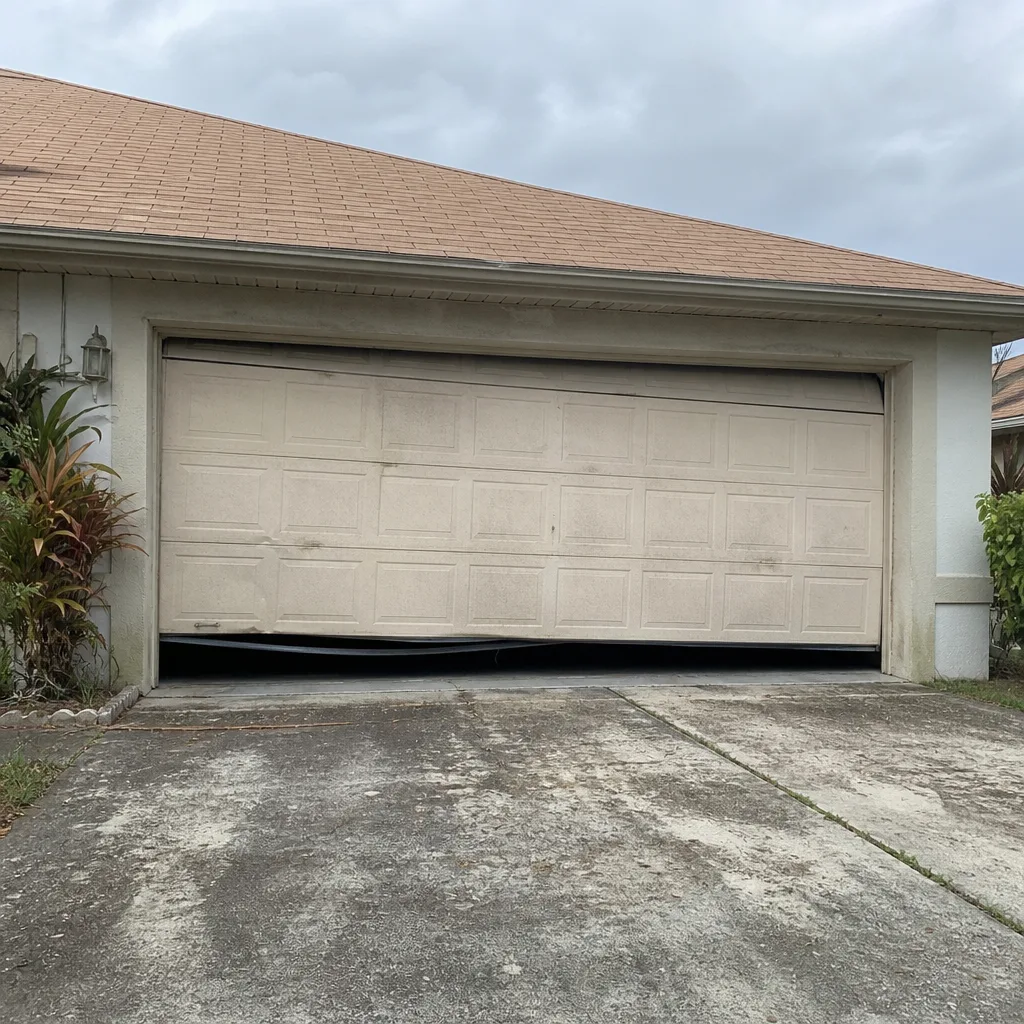
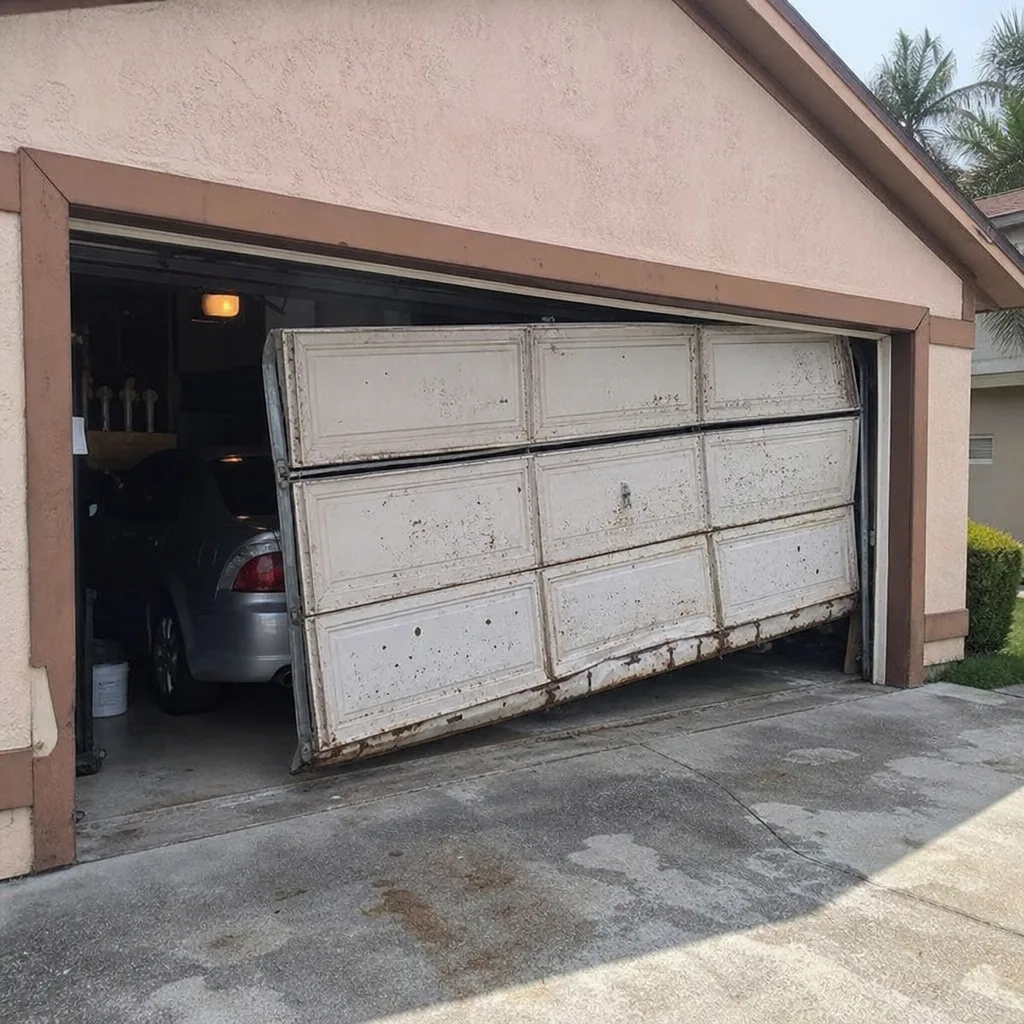
- Visible bends or creases in the panels, especially at the bottom section or along the hinge lines.
- Tracks that are bowed, spread, or pulled away from the wall. A gap between track and wall means the door isn’t supported correctly.
- Cables that are slack, frayed, kinked, or off their drums. Never touch a cable that’s under tension or looks compromised.
- Springs that look stretched, uneven, or disconnected. A broken spring is under extreme tension and can cause serious injury. Leave it alone.
- A door that’s visibly off-center in its opening, or sitting lower on one side than the other.
- Grinding, popping, or scraping sounds when the door is nudged, even gently.
- Water intrusion or pooled water around the door base or the opener housing.
If none of those signs are present and the door looks straight and level, you can try a slow manual lift with the door disconnected. If it moves smoothly with even effort, you can reconnect and test the opener. If it binds, grinds, or feels heavier than usual, stop and call.
We’ve seen enough storm-season damage in Kendall to say the same thing every time: a door that looks fine can still have a bent track or a weakened spring that fails on the next cycle. A technician’s inspection is quick and catches what a visual check from the driveway won’t. It’s also worth knowing when a repair is realistic and when a garage door repair has to give way to replacement, and a professional can tell you which you’re looking at.
What to Keep in the Garage So a Minor Repair Doesn’t Wait for Days
The difference between a five-minute fix and a week-long wait is usually a handful of parts you already have on a shelf. When a storm knocks out power or a door gets knocked slightly out of alignment, having the right tools on hand lets you secure things safely and make a minor adjustment without waiting for a service call. The goal isn’t to do repairs yourself. It’s to stabilize the door until a technician can look at it.
Keep this in your Kendall garage:
- A ladder tall enough to reach the opener and the upper tracks safely. A step stool won’t get you high enough on most doors.
- A set of nut drivers and a socket set for hinge and bracket bolts. Confirm the sizes your door uses.
- Spare hinge screws, since a loose screw is one of the most common causes of a door that starts binding.
- A flashlight and spare batteries. Power outages and dark garages go together.
- A manual lock key or bar if your door uses one, kept somewhere you’ll remember.
- Weather stripping or a door seal kit for a door that’s leaking at the bottom.
- A tape measure so you can note the door’s dimensions and any change in track spacing for the technician.
Don’t keep a toolkit you don’t know how to use. A homeowner with the wrong torque on a track bolt or a screwdriver in a spring assembly can cause more damage than a storm. The parts worth having are the ones that let you tighten a loose hinge, secure the door, and document what’s wrong. Everything else is a technician’s job. When in doubt, snap a photo of the problem and describe it when you call, so we know what to expect.
Opener and Spring Checks That Belong on Your Storm Checklist
Two components carry the biggest risk in a storm, and they need different kinds of attention. The opener is electronics, and the springs are mechanical tension. Both should be checked well before the season starts, because a problem found in calm weather is easy to fix and a problem found during a warning is not.
For the opener, work through this before storm season:
- Test the manual release. Pull the cord with the door closed and confirm the door disconnects cleanly. Reconnect it and run a full cycle.
- Check that the wall-mounted control still works and that the door responds to it, not just to the remote.
- Confirm the safety sensors are aligned and unobstructed. A door that won’t close during a storm because a sensor is blocked is a problem you can prevent.
- Check the smart opener’s manual. Openers like LiftMaster and Chamberlain can behave differently after a power interruption, so know where the reconnect procedure is before you need it.
For the springs, the rule is simple: look, don’t touch. Spring tension can do serious harm, and a spring that’s failing can look almost normal. Have a technician inspect spring condition, balance, and the cables that ride with them as part of a pre-season check. If a spring is broken, stretched, or making noise, that’s a garage door spring repair for a trained technician, not a task to attempt. Spring replacement done safely, the first time, is what we do every day.
The advantage of a pre-season check is that it catches the weak points while the weather is calm and the fix can be scheduled. It also means that if something does fail during a storm, you’re dealing with a smaller problem than you might have been.
Common Mistakes to Avoid
- Pulling the release cord while the door is open. A disconnected open door can drop without warning. Always confirm the door is fully closed and at rest before you pull the cord.
- Forcing a partially open door shut during a storm. Pushing a door that’s under wind load or bound in its track bends panels and throws tracks out of alignment. Stabilize it and, if it’s safe to do so, lower it slowly with the release engaged.
- Skipping the manual lock during a warning. Relying on the opener to hold the door through sustained wind is risky, especially when power is unreliable. Engage the mechanical lock before the storm arrives.
- Touching cables or springs after a storm. Both sit under heavy tension and can fail suddenly. Visual inspection only, from a safe distance.
- Opening a bent or off-center door to “see if it works.” A door that looks slightly out of line is exactly the one that fails on its next cycle. Get it assessed first.
- Waiting to book a pre-season check. Storm season is busy for every garage door company. A check scheduled in the calm weeks catches loose hinges, worn rollers, and weak springs while there’s time to fix them without a scramble.
- Assuming a smart opener will reconnect cleanly after an outage. Power interruptions can leave app-controlled openers in a state where the manual release is the only dependable control, so know how to use it before you need to.
When to Call a Professional
Most of this guide is about what you can do safely before and after a storm. Some situations are beyond what a homeowner should handle, and those are the ones where a call is the right move. A door that’s off its track, a bent panel that’s binding, a broken or noisy spring, a cable that’s slack or frayed, or a door that’s holding partway open and won’t move safely all need a trained technician. Spring and cable work is genuinely dangerous, and a door that’s out of alignment can fail suddenly if forced. If the storm has passed and you’re not sure whether the door is safe, have it checked before you open it.
Kendall Garage Door Repair Co offers free estimates in Kendall. We’re factory-familiar with LiftMaster, Chamberlain, Genie, Clopay, Amarr, Wayne Dalton, Craftsman, and Raynor systems, so we already know your door before we knock. Call (844) 484-9800. We answer 24/7. Fast dispatch from 7am to 7pm, Sunday through Friday.
Frequently Asked Questions
Secure the door mechanically before the storm: close it fully, engage the manual lock, and disconnect the opener from the door with the release cord so the opener can’t fight a locked door. Check that hinges and track bolts are tight, clear the area around the door, and confirm the bottom seal is seated against the floor. A pre-season check with a technician catches worn springs and loose hardware while there’s still time to fix them.
Only with the door’s manual release and only under controlled conditions. If the door is fully closed and at rest, you can pull the release cord, lift the door slowly to reach the manual lock or disconnect the opener, and lower it by hand. Never operate a door by hand if it’s under load, off-track, or partway open and drifting. When in doubt, leave it closed and call.
No, not until you’ve inspected it. Bowed tracks, bent panels, slack or frayed cables, and springs that look stretched or broken all mean the door shouldn’t be moved by hand. Cables and springs are under heavy tension and can cause serious injury. If the door looks straight and level, a slow manual lift is reasonable. If it binds or feels heavier than usual, stop and have it checked.
Keep everyone clear and determine whether the door is stable or drifting. If it’s stable and you can reach the release cord safely, support the door at the bottom by hand, release it from the opener, and lower it slowly and evenly. Once it’s closed, engage the manual lock. If the door won’t lower smoothly or feels like it’s fighting you, leave it and call a technician.
Yes. We connect you with local professionals who are licensed and insured as the state requires, and our technicians have up to 10 years of experience working on the door and opener systems Kendall homes have installed. We work on all major residential brands, from Clopay and Amarr doors to LiftMaster and Chamberlain openers.
Spring repair is priced per job, and the written estimate sets the final price, so the number you’re quoted is the number you pay. Call (844) 484-9800 for an exact quote. Estimates are free, and we’ll tell you whether the door needs a spring repair or something more. We answer 24/7, with fast dispatch from 7am to 7pm, Sunday through Friday.
The Bottom Line
Emergency garage door preparedness in Kendall has two halves, and both matter: getting the door storm-ready before the wind arrives, and knowing how to handle the door safely when something fails. The core lessons are simple. Lock the door manually and disconnect the opener before a storm. Pull the release cord only when the door is closed and at rest. Never force a door that’s under wind load, partway open and drifting, or visibly off-track. Inspect the door for structural damage before you touch it after a storm, and keep a small kit of tools and hardware so a minor problem doesn’t become a long wait. When a door is bent, off its track, or making the sounds that mean a spring or cable is failing, call a technician before you move it. We’re here for the rest. Kendall Garage Door Repair Co handles repair, opener service, spring work, and installation across Kendall.
For a free estimate or to schedule a pre-season inspection, call (844) 484-9800. We answer 24/7. Fast dispatch from 7am to 7pm, Sunday through Friday.
Written by the team at Kendall Garage Door Repair Co.
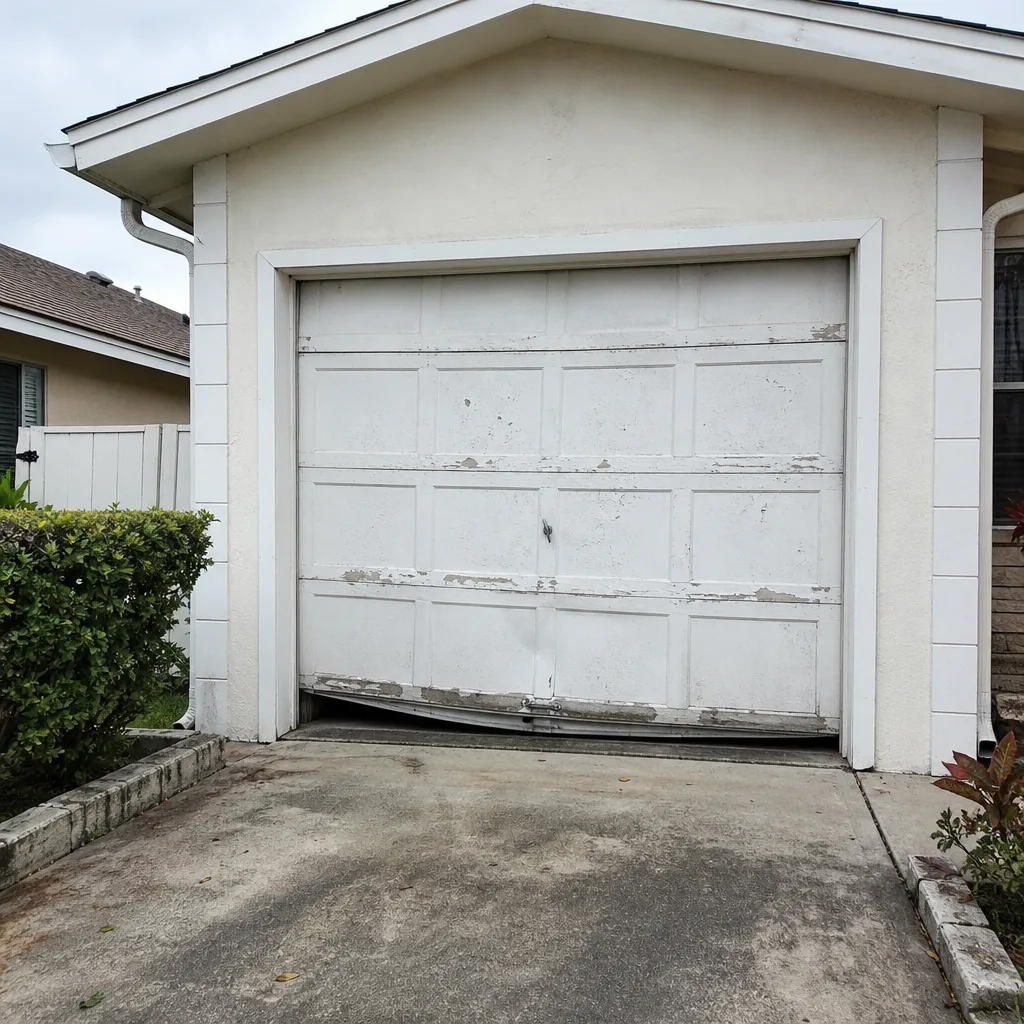
See the difference
 Before
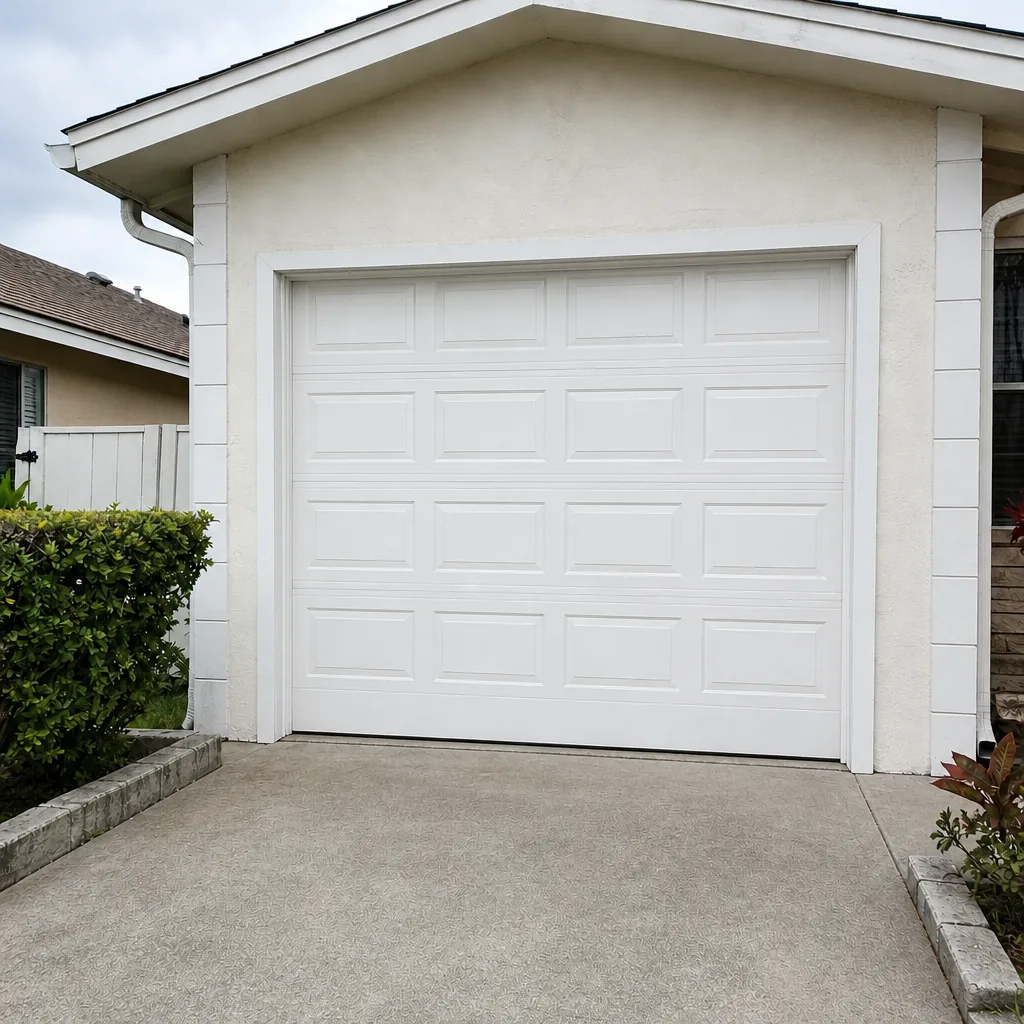
 After
 Before
 After
 Before
 After